

Turbine blade
During turbine blade coating, cameras and software monitor the evaporation process in the vacuum chamber. Deviations that could ruin an entire batch are detected early, and every step is fully documented for aviation.
Turbine blade at a glance
Most frequent in the projects on this page
Use cases
Technologies
Verified projects featuring Turbine blade
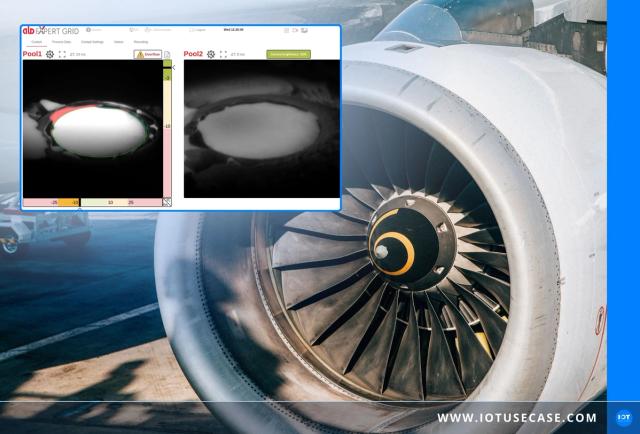



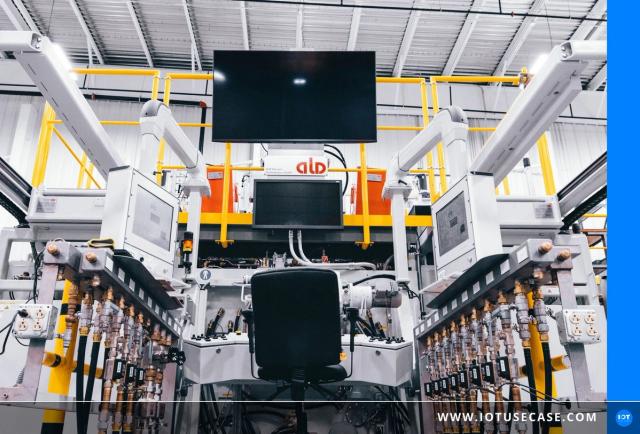

Turbine blade coating: cameras safeguard the ceramic layer
ALD Vacuum Technologies coats turbine blades for aircraft engines with a wafer-thin ceramic layer: an electron beam evaporates the ceramic, and the blades move through the vapour cloud. The ALD EXPERT Advanced Observation System (AOS) points a process camera at the melt pool and shows detected anomalies directly in the live video. The EB Vision Monitoring module reacts only to changes in light intensity, reducing data volume, and derives KPIs such as pool roughness, pool level and overflow. They are stored in InfluxDB, Python scripts prepare the data and Grafana dashboards visualise it. The ALD EXPERT GRID platform combines data from PLCs and sensors.
Both solution examples come from ALD Vacuum Technologies in Hanau and cover mechanical and plant engineering, automotive and metal and electronics. Previously, an operator had to watch the evaporation process through a small viewport for an entire eight-hour shift. Today, process videos are stored with a time stamp and batch number, reducing documentation effort and improving traceability. According to ALD, faulty batches occur less often and equipment downtime has fallen significantly. In podcast episode #133, Frederic Schum presents the ALD EXPERT solutions, including camera-based monitoring of turbine blade coating.
Podcast episodes featuring Turbine blade
Turbine blade coating: frequently asked questions
Why does a turbine blade get a ceramic coating?
A turbine blade gets a ceramic coating because temperatures inside the turbine come close to the load limits of the materials. The wafer-thin layer serves primarily as thermal insulation. According to ALD Vacuum Technologies, it extends engine life, increases operational safety and improves efficiency, while noise and kerosene consumption can also be reduced. To achieve this, it must be applied with a targeted layer thickness distribution.
How is a titanium turbine blade coated?
In the ALD Vacuum Technologies solution example, a titanium turbine blade for aircraft engines receives a ceramic layer just micrometres thick. The ceramic is bombarded with an electron beam and evaporates. The blades are moved translationally and rotationally in this vapour cloud so that a homogeneous thin layer forms. This allows them to withstand higher combustion temperatures.
How do cameras safeguard quality in jet engine blade coating?
Cameras safeguard quality by continuously observing the melting and evaporation process and making deviations from the target process visible immediately. At ALD, a process camera points at the melt pool and shows how fill level and surface change or whether material is about to overflow. The AOS highlights detected anomalies directly in the live video. Previously, an operator had to watch the process through a small viewport for the entire shift.
How is turbine blade manufacturing documented without gaps?
Manufacturing is documented without gaps when the process data and videos of every coating run are stored automatically with a time stamp and batch number. ALD EXPERT stores the process videos in a database in this way and saves KPIs such as pool level and overflow in InfluxDB. This reduces documentation effort and improves the traceability of production steps. Automatically generated quality assurance documents make it easier to comply with the strict standards in aviation.
More assets in “Piece Goods / Bulk Material”

Parcel
Parcel sorting with IoT starts in goods receiving, where sensors capture each parcel’s tracking number, size and weight. Shipments are routed by priority, packing teams know early what is coming, and manual scanning ends.

Workpiece
Manufacturing traceability assigns each workpiece its identifier, its position and all process and inspection data. Manufacturers can thus document every work step and detect quality deviations before scrap is produced.

Printed circuit board
PCB manufacturing digitalisation connects machines, controllers and the ERP so that every printed circuit board is produced with the right parameters. Manufacturers detect downtime and bottlenecks, avoid operating errors and give customers the production data they ask for.

Raw material batch
Batch management with IoT links every raw material batch to weighing data, test results and the production order. When deviations or audits occur, manufacturers see at once which batch went into which product instead of searching paper and Excel files.

Goods in transit
Cargo theft prevention starts with IoT trackers that report the position, temperature and shocks of goods in transit. They show shippers at all times where their goods are and reveal break-in attempts, delays or problems in the cold chain.

Injection-moulded part
Injection moulding defects often show up in cooling and process data before they become visible on the moulded part. IoT continuously records mould temperature, cooling water and machine data so that deviations are noticed before faulty parts are produced.
IIoT Use Case user group
What no project tells you
What did the project cost? Which sensor didn't survive in the field? How did you get maintenance on board? 300+ industrial users discuss questions like these with each other every month, openly and without vendors in the room.
Frequent topics in these projects, bring your questions:
- Quality Management
- Traceability
Online every month
Alternating tech and business focus
Users only
No sales pitches, exchange under NDA
300+ members
OT, IT and IIoT leads from industry
