Printed circuit board
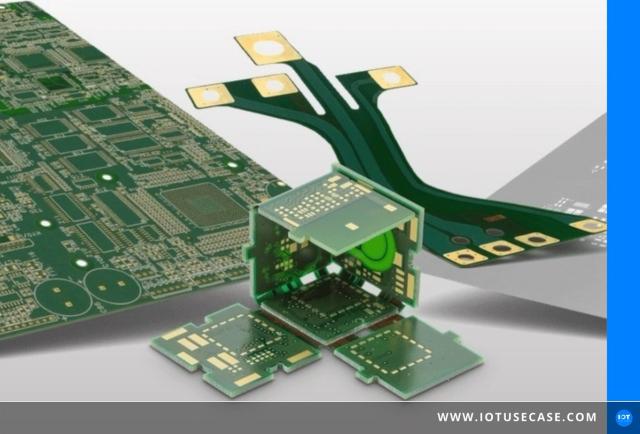
PCB manufacturing digitalisation connects machines, controllers and the ERP so that every printed circuit board is produced with the right parameters. Manufacturers detect downtime and bottlenecks, avoid operating errors and give customers the production data they ask for.
Printed circuit board at a glance
Most frequent in the projects on this page
Use cases
Users in these projects


Verified projects featuring Printed circuit board










IT/OT integration for a unified data foundation – using PCB manufacturing as an example
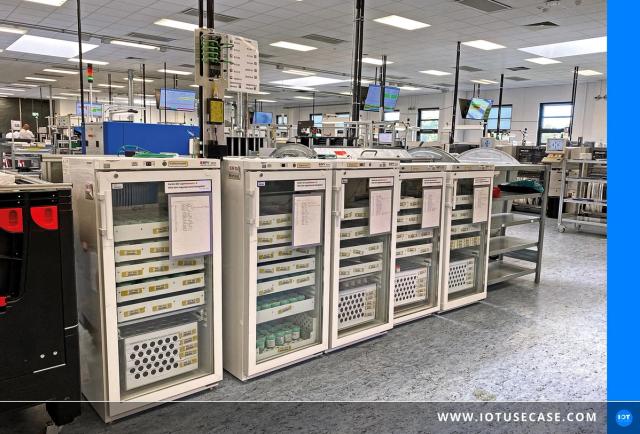


Printed circuit board production: condition monitoring of solder paste



Placed on a solid MES footing – more efficient PCB production thanks to a solid database
PCB manufacturing digitalisation: connected machines, consistent data
At KSG, edge devices of the autinityDAP platform from Schaeffler Digital Solutions capture machine and production data via OPC UA, MQTT and Profinet. A central library standardises the names, the data is stored in PostgreSQL, processed with Node-RED and visualised in Grafana. For every board, the application retrieves the matching parameters from the ERP and writes them to the PLC. Würth Elektronik controls production with the FabEagle MES from Kontron AIS, which collects machine status data, alarms and throughput. In its own SMT production, TURCK monitors the solder paste: temperature sensors in the refrigerators and, during printing, humidity as well, transmitted to the cloud via IO-Link.
All examples come from the electronics industry. KSG calculates OEE on the unified data basis and reduces manual sources of error; podcast episode #173 describes the project with Schaeffler Digital Solutions. Würth Elektronik introduced its MES when large parts of its machinery had to be replaced after a fire, and piloted it on the solder resist line first. Episode #82 shows the path to a digital twin of the board. At TURCK in Beierfeld, a dashboard shows changes in temperature and humidity, and RFID tracking of the solder paste is the next step.
Podcast episodes featuring Printed circuit board
PCB manufacturing digitalisation: frequently asked questions
What does SMT production need to monitor in solder paste?
SMT production needs to keep an eye on the storage temperature, humidity and timing of the solder paste, as these determine the durability of the solder joint. TURCK keeps the paste containers in refrigerators at a constant temperature and monitors them with temperature sensors. During printing, which must take place at 23 to 27 °C, the system also measures humidity. After printing, no more than eight hours should pass before the board is finally soldered.
How does SMT line monitoring work with IoT?
In SMT assembly, storage and processing of the solder paste can be captured with standard sensors before the line is connected to the MES. TURCK uses the same technology as in its control cabinets: temperature and distance sensors that send data to the cloud via a condition monitoring hub, IO-Link and a switch. The concept is based on Linux and open to the user's own installations. Later, RFID is intended to prove that each container was stored correctly.
How does IoT support PCB process control?
In the PCB fabrication process, the application retrieves the matching parameters for each board from the ERP and writes them to the PLC automatically. This is how KSG prevents operating errors, since any deviation in the chemical processes quickly leads to scrap. The autinityDAP platform from Schaeffler Digital Solutions provides the machine data centrally with standardised names. KSG also calculates OEE on this data basis.
What does an MES add to PCB production?
An MES combines order, material and machine data and so lays the foundation for further connectivity. Würth Elektronik uses FabEagle from Kontron AIS for order and routing management, material tracking and reporting on machine states, alarms and key figures. This is demanding because a board passes through around 30 production steps and pressing operations make markings disappear. End customers also receive quality data from the MES.
More assets in “Piece Goods / Bulk Material”

Parcel
Parcel sorting with IoT starts in goods receiving, where sensors capture each parcel’s tracking number, size and weight. Shipments are routed by priority, packing teams know early what is coming, and manual scanning ends.

Workpiece
Manufacturing traceability assigns each workpiece its identifier, its position and all process and inspection data. Manufacturers can thus document every work step and detect quality deviations before scrap is produced.

Raw material batch
Batch management with IoT links every raw material batch to weighing data, test results and the production order. When deviations or audits occur, manufacturers see at once which batch went into which product instead of searching paper and Excel files.

Goods in transit
Cargo theft prevention starts with IoT trackers that report the position, temperature and shocks of goods in transit. They show shippers at all times where their goods are and reveal break-in attempts, delays or problems in the cold chain.

Injection-moulded part
Injection moulding defects often show up in cooling and process data before they become visible on the moulded part. IoT continuously records mould temperature, cooling water and machine data so that deviations are noticed before faulty parts are produced.

Inventory
Real time inventory tracking with IoT records stock automatically: sensors, code readers and RFID book every withdrawal and load as soon as it moves. Teams save warehouse walks and manual counts, and the ERP knows the actual stock level.
IIoT Use Case user group
What no project tells you
What did the project cost? Which sensor didn't survive in the field? How did you get maintenance on board? 300+ industrial users discuss questions like these with each other every month, openly and without vendors in the room.
Frequent topics in these projects, bring your questions:
- Condition Monitoring
- Traceability
- Asset Management
Online every month
Alternating tech and business focus
Users only
No sales pitches, exchange under NDA
300+ members
OT, IT and IIoT leads from industry