

Parcel
Parcel sorting with IoT starts in goods receiving, where sensors capture each parcel’s tracking number, size and weight. Shipments are routed by priority, packing teams know early what is coming, and manual scanning ends.
Parcel at a glance
Most frequent in the projects on this page
Use cases
Industries
Users in these projects


Verified projects featuring Parcel
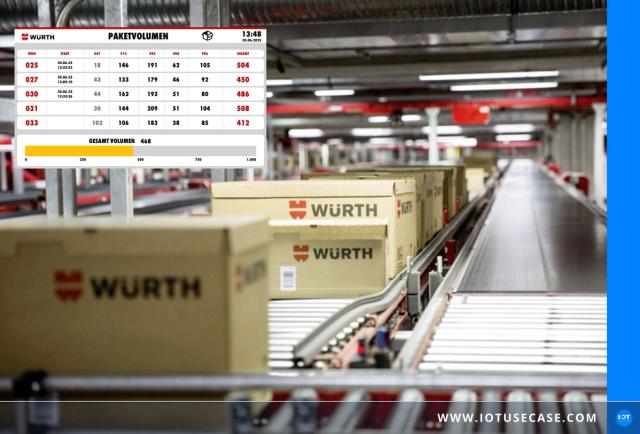



Improving workforce planning in the packing department through parcel flow forecasting
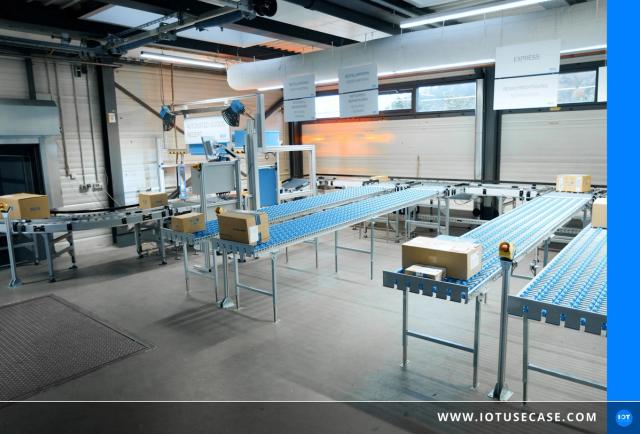



Transparency and efficiency in goods receipt – through automated identification and sorting
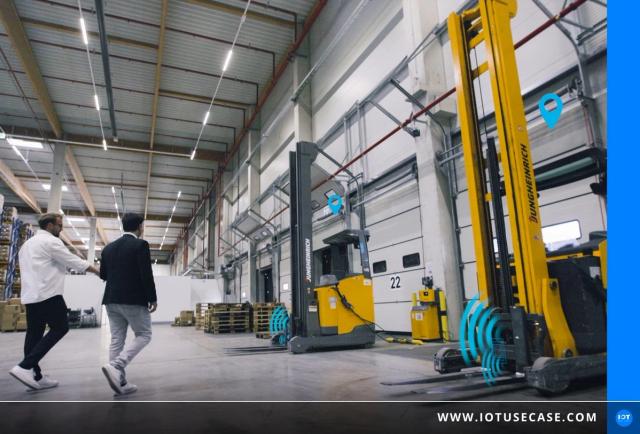



40% process acceleration in the warehouse with IoT




Sharp robot gaze reduces picking error rate
Parcel sorting and identification in goods receiving with IoT
In the solution examples, SICK reads the parcel carrier and express shipments from the tracking number. A DWS system measures the dimensions with 2D LiDAR sensors and the weight with a scale, and conveyor technology from next intralogistics distributes the parcels to separate lines. At TB International, RFID readers identify parcels that suppliers have fitted with RFID labels and book them into SAP Business One in real time. Forklifts with RFID and UWB handle put-away, and an edge unit transmits the data to the cloud via MQTT. At Würth, Peakboard combines data from SAP and a material flow computer in a dashboard that shows the number and size of parcels per series cycle. For gripping parcels, Fizyr combines 2D images from a uEye camera with 3D point clouds from an Ensenso camera by IDS.
The examples come from retail, logistics and consumer goods, with use cases such as digital goods receipt, traceability and inventory management. With the RFID solution from INTRANAV, TB International increased efficiency in full-carton handling by almost 40 per cent. At its Distribution Centre North, Würth sees in advance how many parcels are coming and deploys packing staff flexibly. For SICK, automating parcel receipt already paid off at 150 to 300 parcels a day.
Podcast episodes featuring Parcel
Parcel sorting: frequently asked questions
How can inbound logistics for parcels be automated?
Inbound logistics for parcels can be automated by placing parcels on a conveyor where they are identified, measured and sorted by defined criteria. At SICK, there are separate lines for express shipments, uncleared goods, and returns and repairs. The parcel carrier can unload at any time without staff having to be present. Employees process the pre-sorted shipments by priority and find individual parcels much faster.
Why are parcels dimensioned and weighed on arrival?
Dimensions and weight prove what was actually delivered and help with claims and negotiations with parcel carriers. In SICK's goods receipt, 2D LiDAR sensors in a DWS system measure the dimensions and a scale records the weight. Goods ordered at one kilogram cannot be inside a parcel measured at 500 grams. Together with images taken at the moment of handover, damage claims become much easier to settle.
How does RFID work for parcels in a warehouse?
With RFID, parcels are recognised on arrival without scanning, because readers capture the labels automatically. At TB International, suppliers attach the RFID labels, and the parcels are recorded in INTRANAV and SAP Business One in real time. Manual matching of goods and scanning of individual cartons are no longer needed. On retrieval, an RFID gate checks whether the order is complete and closes it in the ERP system.
How does robotic picking handle unknown parcels?
Robotic picking recognises unknown parcels through image processing that combines 2D images and 3D data. Fizyr's software classifies objects such as boxes, bags or envelopes in images from an IDS uEye camera. An Ensenso camera provides a 3D point cloud from which the software derives the best gripping position. The robot performs more than 100 grasp poses per second and detects damaged parcels before they reach the sorter.
More assets in “Piece Goods / Bulk Material”

Workpiece
Manufacturing traceability assigns each workpiece its identifier, its position and all process and inspection data. Manufacturers can thus document every work step and detect quality deviations before scrap is produced.

Printed circuit board
PCB manufacturing digitalisation connects machines, controllers and the ERP so that every printed circuit board is produced with the right parameters. Manufacturers detect downtime and bottlenecks, avoid operating errors and give customers the production data they ask for.

Raw material batch
Batch management with IoT links every raw material batch to weighing data, test results and the production order. When deviations or audits occur, manufacturers see at once which batch went into which product instead of searching paper and Excel files.

Goods in transit
Cargo theft prevention starts with IoT trackers that report the position, temperature and shocks of goods in transit. They show shippers at all times where their goods are and reveal break-in attempts, delays or problems in the cold chain.

Injection-moulded part
Injection moulding defects often show up in cooling and process data before they become visible on the moulded part. IoT continuously records mould temperature, cooling water and machine data so that deviations are noticed before faulty parts are produced.

Inventory
Real time inventory tracking with IoT records stock automatically: sensors, code readers and RFID book every withdrawal and load as soon as it moves. Teams save warehouse walks and manual counts, and the ERP knows the actual stock level.
IIoT Use Case user group
What no project tells you
What did the project cost? Which sensor didn't survive in the field? How did you get maintenance on board? 300+ industrial users discuss questions like these with each other every month, openly and without vendors in the room.
Frequent topics in these projects, bring your questions:
- Asset Tracking/ Track and Trace
- Traceability
- Condition Monitoring
Online every month
Alternating tech and business focus
Users only
No sales pitches, exchange under NDA
300+ members
OT, IT and IIoT leads from industry
