Spare part
Spare parts management with IoT shortens the path from a defective component to the right replacement. AI recognises parts in photos, RFID books withdrawals automatically, and condition data shows early which part will be needed. Downtime falls.
Spare part at a glance
Most frequent in the projects on this page
Users in these projects

Verified projects featuring Spare part





Spare parts management: identify, find and reorder parts faster
ITK Engineering and Bosch Cognitive Services have developed a spare parts recognition system whose neural network identifies parts from photos. A rig automatically photographs spare parts from several angles for training in the cloud, while recognition runs locally with embedded AI on an industrial computer. Maintenance staff photograph the defective part with a smartphone or tablet and receive a list of possible spare parts with ID and storage location within seconds, even for dirty or damaged components. TURCK Vilant Systems supplies the RFID hardware for mobile self-service stores and the software for booking, invoicing and assignment to users.
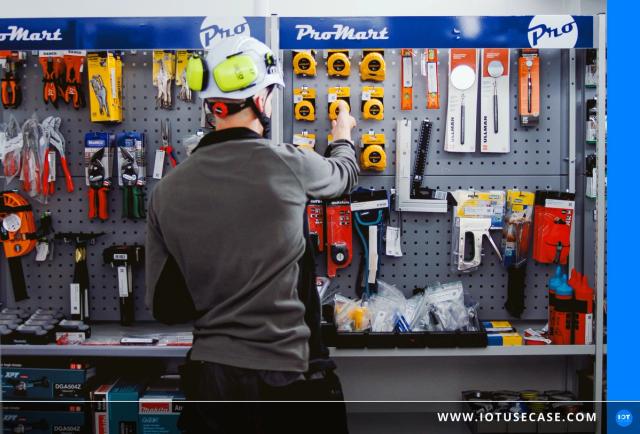
In technical wholesale, ProMart operates its EasyMart Store, an unmanned spare parts store in an ISO container right on the construction site. Goods issue, invoicing and reordering run automatically, and stocktaking is possible at the push of a button at any time. According to the provider, the ITK Engineering solution can distinguish up to 20,000 spare part classes. Podcast episodes complete the picture: in #162, UNTHA presents the spare parts catalogue with 3D models in its MyUNTHA portal, and in #158 Novoferm and Smartsquare explain how the NovoAssist app helps technicians identify the right spare parts on site.
Podcast episodes featuring Spare part
Digital maintenance made easy – how self-service works in the MyUNTHA portal
IIoT for smart door systems: How Novoferm and Smartsquare are digitalizing service and maintenance
PIA Maintenance App – How Proactive Service and Demand-Based Maintenance Is Done
Spare parts management: frequently asked questions
How does an unmanned spare parts store work?
An unmanned spare parts store books every withdrawal automatically and needs no staff on site. At ProMart's EasyMart Store, an individual RFID card controls access, and only one person may be inside the container at a time. The code on the item is scanned with the card, and the selection is confirmed at the end. Invoicing, goods issue and the stock reconciliation then run automatically, as does the reorder.
How does industrial spare parts identification from a photo work?
A trained neural network recognises the spare part in a photo and suggests matching items. With the solution from ITK Engineering and Bosch Cognitive Services, maintenance staff photograph the defective part with a smartphone or tablet. Within seconds, a list of possible spare parts with ID and storage location appears. Recognition also works with varying backgrounds, low image quality and dirty or damaged components.
What are the benefits of a digital spare parts catalogue?
A digital spare parts catalogue helps to identify components unambiguously and order them directly. In its MyUNTHA customer portal, UNTHA offers a catalogue with 3D models alongside condition monitoring and digital maintenance plans, as podcast episode #162 shows. In future, the modules are to be linked so that a condition value leads directly to a recommended action and a spare parts order. At Novoferm, digital spare parts lists speed up procurement.
How does automatic reordering of spare parts work?
Automatic reordering starts as soon as the system records a withdrawal and compares it with the planned stock. In ProMart's EasyMart Store, RFID devices capture goods movements, and all data is available in real time at ProMart's head office. Automated fill lists keep the desired stock for every item, so replenishment is as unmanned as the purchase itself. The system also handles loans and advance orders.
More assets in “Piece Goods / Bulk Material”

Parcel
Parcel sorting with IoT starts in goods receiving, where sensors capture each parcel’s tracking number, size and weight. Shipments are routed by priority, packing teams know early what is coming, and manual scanning ends.

Workpiece
Manufacturing traceability assigns each workpiece its identifier, its position and all process and inspection data. Manufacturers can thus document every work step and detect quality deviations before scrap is produced.

Printed circuit board
PCB manufacturing digitalisation connects machines, controllers and the ERP so that every printed circuit board is produced with the right parameters. Manufacturers detect downtime and bottlenecks, avoid operating errors and give customers the production data they ask for.

Raw material batch
Batch management with IoT links every raw material batch to weighing data, test results and the production order. When deviations or audits occur, manufacturers see at once which batch went into which product instead of searching paper and Excel files.

Goods in transit
Cargo theft prevention starts with IoT trackers that report the position, temperature and shocks of goods in transit. They show shippers at all times where their goods are and reveal break-in attempts, delays or problems in the cold chain.

Injection-moulded part
Injection moulding defects often show up in cooling and process data before they become visible on the moulded part. IoT continuously records mould temperature, cooling water and machine data so that deviations are noticed before faulty parts are produced.
IIoT Use Case user group
What no project tells you
What did the project cost? Which sensor didn't survive in the field? How did you get maintenance on board? 300+ industrial users discuss questions like these with each other every month, openly and without vendors in the room.
Frequent topics in these projects, bring your questions:
- Asset Management
- Corrective maintenance
Online every month
Alternating tech and business focus
Users only
No sales pitches, exchange under NDA
300+ members
OT, IT and IIoT leads from industry