Welding robot
A connected industrial welding robot delivers cycle times, piece counts and status messages in real time. Operators make downtime visible, balance the utilisation of their robot lines and integrate the robots into end-to-end order control.
Welding robot at a glance
Most frequent in the projects on this page
Technologies
Users in these projects


Verified projects featuring Welding robot
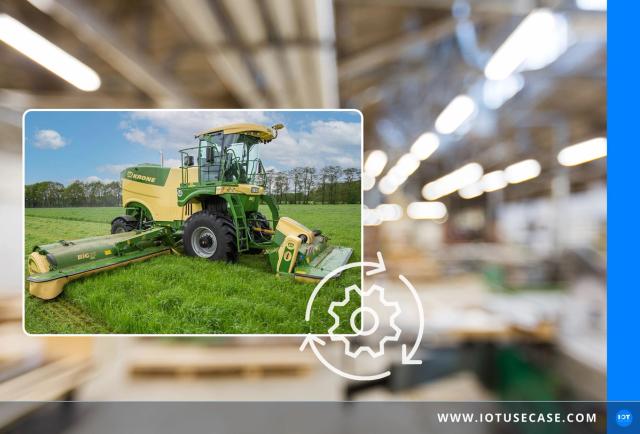






Build a smart factory – with seamless IT/OT integration and event-driven architecture
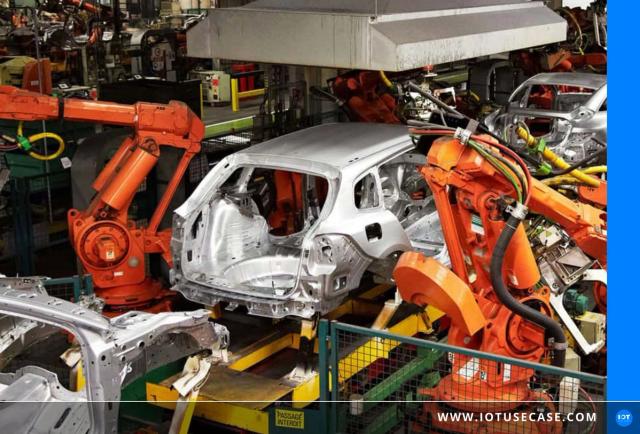

Digital transformation at Groupe Renault




Dashboard live data on the shop floor: robots optimally utilised
Industrial welding robot: utilisation, cycle times, orders
The solution examples rely on open standards. Groupe Renault operates automatic welding machines and industrial robots with their own operating systems, some dating back to the 1980s, and equips older systems with OPC UA adapters; the data reaches Google Cloud Platform via MQTT. KRONE connects its equipment via OPC UA, MQTT, HTTP/REST and Siemens S7 to Cybus Connectware, which acts as a local event broker and passes selected events on to Apache Kafka and Grafana dashboards. Where the robot controller must remain untouched, light barriers on Peakboard Edge record the flow of parts.
The examples come from the automotive industry and mechanical engineering. In Ibbenbüren, KRONE turned a greenfield site into a smart factory with its first welding robots within twelve months; orders are handled as data objects, and machines report completion and trigger follow-up processes. Renault uses OPC UA at 17 of its 38 plants with 3,300 devices. At two robot lines for welding and punching, light metal specialist ZARGES visualises cycle and takt times; production now flows more evenly, and the robots' warranty and CE marking remain intact.
Podcast episodes featuring Welding robot
Industrial welding robots: frequently asked questions
How can a welding robot cell be connected without changing the PLC?
By using external sensors that measure alongside the controller. ZARGES retrofitted its robot lines for welding and punching with Peakboard Edge: two light barriers detect the products one after the other and feed the data into the system. Because the PLC remains untouched, no new CE certification is required and the robot manufacturer's warranty stays valid. The solution was implemented within a few days and runs entirely on the local network.
How can cycle times and downtime in a welding cell be made visible?
Sensors count every finished part, and the software calculates cycle and takt times from this and displays them on dashboards. At ZARGES, the displays refresh every two to ten seconds, while further screens show SAP order and logistics data. The values are also written to an SQL database and can be analysed in BI systems. Downtime becomes visible immediately, and robot utilisation has become noticeably more balanced.
How is welding automation integrated into end-to-end order control?
Through a central data infrastructure that processes events from all machines and welding robots in near real time. KRONE built its plant in Ibbenbüren on an event-driven architecture: as a local event broker, Cybus Connectware unifies the data from the welding robots and other equipment. Orders are handled as data objects, which the machines execute before reporting completion. This also makes it possible to integrate automated guided vehicles that were previously not connected.
Can welding fumes and pollutants be monitored automatically?
Yes, KRONE uses automated pollutant monitoring for welding work in its smart factory in Ibbenbüren. Data-based monitoring of ambient conditions and pollutants improves occupational safety. It relies on the same data infrastructure that captures machine events in real time and shares them across system boundaries. KRONE also analyses energy consumption in real time to promote energy efficiency and meet ESG guidelines.
More assets in “Conveying and Handling Technology”

Automated guided vehicle (AGV)
An AGV system brings material automatically from the warehouse to the line when a central fleet controller coordinates the automated guided vehicles (AGV). With IoT, sensors trigger transport orders and vehicles from different manufacturers run in one system.

Crane
Predictive crane maintenance with IoT focuses on the cable carrier, which guides power and data cables to the trolley. Sensors report overload or breakage before the crane comes to a standstill and give maintenance and replacement recommendations.

Industrial robot
Predictive robot maintenance with IoT brings the condition and performance data of industrial robots together on one platform. Operators detect faults and wear before a robot comes to a standstill, and manufacturers identify maintenance cases remotely.

Conveyor belt
Conveyor belt maintenance with IoT relies on sensors that capture vibration, temperature and the condition of the belt and belt cleaners. Operators detect damage such as a torn belt early, plan maintenance as needed and avoid costly line stoppages.
Forklift truck
Forklift tracking with IoT shows where every forklift truck is, which pallet it carries and where that pallet belongs. RFID, UWB and cameras replace manual scanning and document putaway, retrieval and loading automatically.

High-bay warehouse
In a high-bay warehouse, IoT links storage locations, forklifts and warehouse management through real-time data. Staff see on large screens which orders are due next, and pallets are put away and retrieved without manual scanning.
IIoT Use Case user group
What no project tells you
What did the project cost? Which sensor didn't survive in the field? How did you get maintenance on board? 300+ industrial users discuss questions like these with each other every month, openly and without vendors in the room.
Frequent topics in these projects, bring your questions:
- Digital Documentation
- Condition Monitoring
- Employee Safety
Online every month
Alternating tech and business focus
Users only
No sales pitches, exchange under NDA
300+ members
OT, IT and IIoT leads from industry