

Automated guided vehicle (AGV)
An AGV system brings material automatically from the warehouse to the line when a central fleet controller coordinates the automated guided vehicles (AGV). With IoT, sensors trigger transport orders and vehicles from different manufacturers run in one system.
Automated guided vehicle (AGV) at a glance
Most frequent in the projects on this page
Use cases
Industries
Technologies
Users in these projects


Verified projects featuring Automated guided vehicle (AGV)
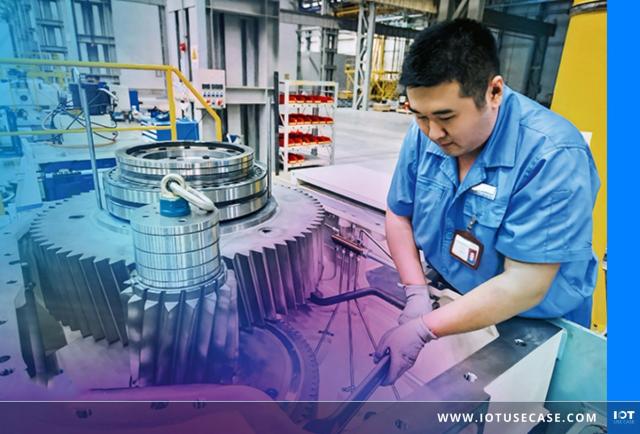

Steering heterogeneous AGV fleets vendor-neutrally via VDA 5050
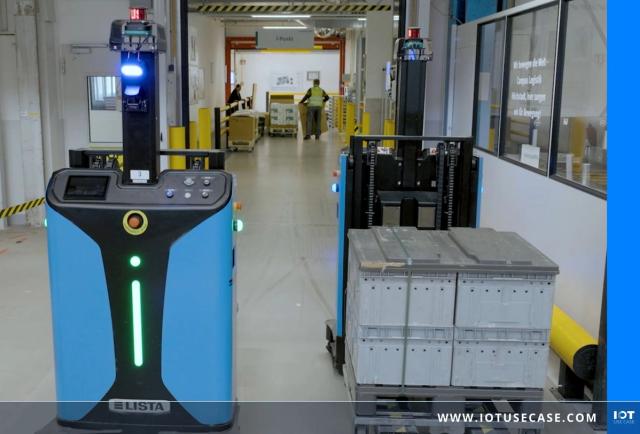
Scaling local material flows with cloud-based fleet control
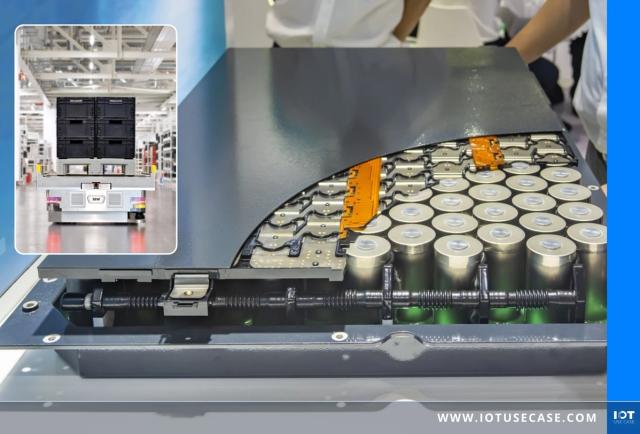


Automating cleanroom intralogistics in battery production with AGVs
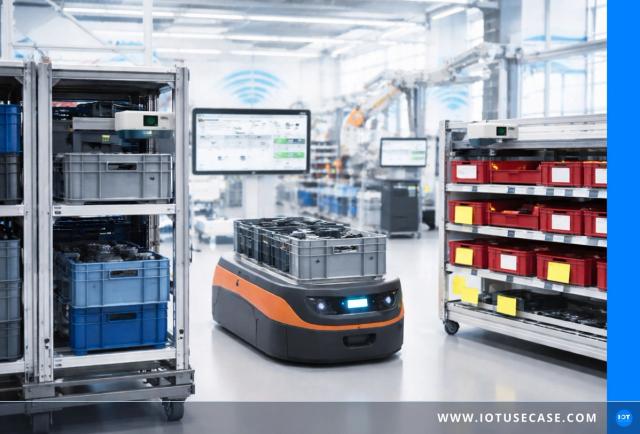





Autonomous guided vehicles (AGVs) with IoT and real-time data for efficient material flows
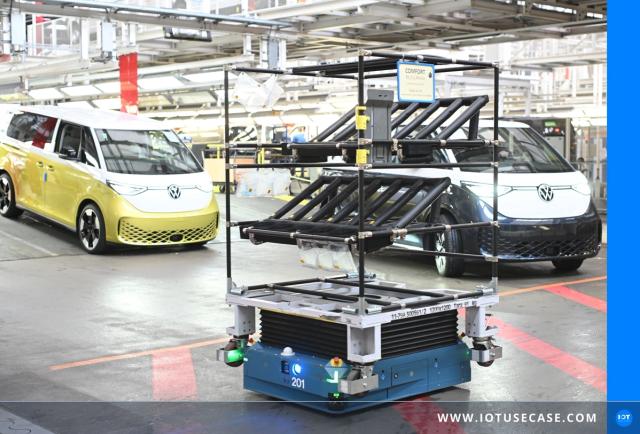

VDA 5050: Unified control layer for AGV fleets, centrally in real time
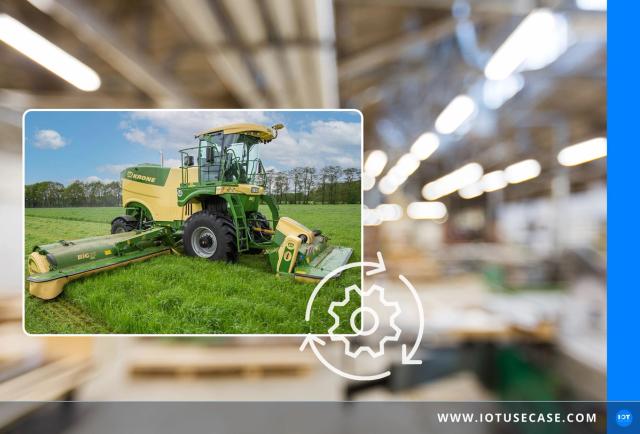




Build a smart factory – with seamless IT/OT integration and event-driven architecture
AGV systems: central control for mixed vehicle fleets
In the solution examples, a fleet controller such as the SYNAOS Intralogistics Platform takes on this task. It calculates and prioritises routes and addresses the vehicles via the standardised VDA 5050 interface, so that underride robots, forklift AGVs and tugger trains from different manufacturers operate as one fleet. At Schaeffler, the AGVs connect to a central message broker that also links machines, doors and traffic lights. ORGATEX measures fill levels with optical storage-space and kanban sensors and transmits them to the cloud via Thread or NB-IoT/LTE-M. Once a threshold is reached, the AGV system automatically receives the transport order. At CLAAS, the AGV master computer provides cycle information via REST, while error codes reach Peakboard dashboards along the assembly line via MQTT.
The examples come from the automotive industry, mechanical engineering and battery production, mostly aiming for efficient material supply and digitalised transport orders. In Hanover, Volkswagen Commercial Vehicles controls almost 100 underride robots and 40 tugger trains via VDA 5050, moving 9,000 racks a day. At Schaeffler's Höchstadt plant, four forklift AGVs controlled by SYNAOS reach a daily utilisation of 98 per cent. In a European battery plant, 42 cleanroom-ready AGVs from SEW-Eurodrive move loads of more than 1,000 kilograms.
Podcast episodes featuring Automated guided vehicle (AGV)
AGV systems: frequently asked questions
How is an AGV system controlled with IoT?
An AGV system is controlled by a central fleet controller that accepts orders, calculates routes and coordinates the vehicles. At Schaeffler, this is done by the cloud-based SYNAOS Intralogistics Platform, provided as software as a service. The AGVs connect to a central message broker that also links production machines, fire alarm systems, doors and traffic lights. The result is one shared architecture instead of a separate fleet manager for each fleet and each site.
What is VDA 5050?
VDA 5050 is a standardised interface through which automated guided vehicles communicate with a central fleet controller, regardless of the manufacturer. Operators therefore do not tie themselves to a single hardware supplier. ZF uses it to coordinate a mixed fleet from different suppliers at several sites. At Volkswagen Commercial Vehicles in Hanover, more than 135 devices, underride robots from MLR and tugger trains from Linde, communicate with the SYNAOS platform via VDA 5050.
Can tugger trains and AGVs be controlled together?
Yes, provided all vehicles connect to the same fleet controller via a common interface. At Volkswagen Commercial Vehicles in Hanover-Stöcken, almost 100 underride robots and 40 automated tugger trains supply the assembly lines with bulk material, vehicle parts and body parts, including just-in-sequence deliveries. All vehicles communicate with the SYNAOS platform via VDA 5050. They move 9,000 racks a day, and the fleet covers around 300,000 kilometres a year.
How can intralogistics automation trigger transport orders?
Intralogistics automation can trigger transport orders when sensors record fill levels and storage spaces and a platform sends the order to the AGV system once a threshold is reached. ORGATEX uses optical storage-space and kanban sensors that detect pallets, containers or cartons. The data travels via Thread or industrial cellular networks to the ORGATEX Cloud, which is connected to ERP and MES via APIs. Missing supplies or delayed pick-ups become less frequent.
More assets in “Conveying and Handling Technology”

Crane
Predictive crane maintenance with IoT focuses on the cable carrier, which guides power and data cables to the trolley. Sensors report overload or breakage before the crane comes to a standstill and give maintenance and replacement recommendations.

Industrial robot
Predictive robot maintenance with IoT brings the condition and performance data of industrial robots together on one platform. Operators detect faults and wear before a robot comes to a standstill, and manufacturers identify maintenance cases remotely.

Conveyor belt
Conveyor belt maintenance with IoT relies on sensors that capture vibration, temperature and the condition of the belt and belt cleaners. Operators detect damage such as a torn belt early, plan maintenance as needed and avoid costly line stoppages.
Forklift truck
Forklift tracking with IoT shows where every forklift truck is, which pallet it carries and where that pallet belongs. RFID, UWB and cameras replace manual scanning and document putaway, retrieval and loading automatically.

High-bay warehouse
In a high-bay warehouse, IoT links storage locations, forklifts and warehouse management through real-time data. Staff see on large screens which orders are due next, and pallets are put away and retrieved without manual scanning.

Welding robot
A connected industrial welding robot delivers cycle times, piece counts and status messages in real time. Operators make downtime visible, balance the utilisation of their robot lines and integrate the robots into end-to-end order control.
IIoT Use Case user group
What no project tells you
What did the project cost? Which sensor didn't survive in the field? How did you get maintenance on board? 300+ industrial users discuss questions like these with each other every month, openly and without vendors in the room.
Frequent topics in these projects, bring your questions:
- Fleet Management
- Asset Management
- Digital Documentation
Online every month
Alternating tech and business focus
Users only
No sales pitches, exchange under NDA
300+ members
OT, IT and IIoT leads from industry
