Transport robot
A transport robot for semiconductor manufacturing has to be configured and accepted with considerable effort before handover. A digital service portal brings together checklists, software versions and equipment history, and so shortens commissioning.
Transport robot at a glance
Most frequent in the projects on this page
Industries
Users in these projects

Verified projects featuring Transport robot
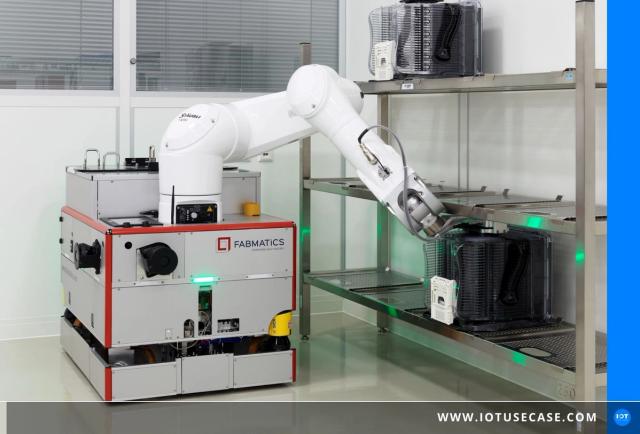




Transport robot with IoT: faster commissioning
In the solution example, this is the web-based EquipmentCloud service solution from Kontron AIS. Service technicians and development and application engineers access it from mobile devices. The Workflows app presents work procedures as a modular task board with checklists, for example for the precise calibration of cameras. Customer-specific version management ensures that each machine receives exactly the updates and patches approved for its device type. Dashboards with dynamic widgets show project status.
The example comes from automation, and the use case is knowledge retention. Fabmatics builds autonomous and rail-guided transport robots and handling systems for semiconductor cleanrooms and used to organise commissioning with Excel spreadsheets. With EquipmentCloud, the company cut the time needed for commissioning by 50 per cent and increased overall process speed by 30 per cent. In the factory acceptance test, every transport robot must run fault-free for 72 hours. Previously this sometimes took several attempts; today one test is needed on average.
Transport robot: frequently asked questions
How can transport robot commissioning be documented efficiently?
With a digital service portal that keeps procedures, checklists and documentation in one place. Fabmatics uses Kontron AIS EquipmentCloud for this instead of Excel spreadsheets. Rotating teams can see work progress at any time and resume interrupted tasks later. The result in the solution example: 50 per cent less time spent on commissioning and 30 per cent higher process speed.
How does acceptance testing of a transport robot work?
At Fabmatics, the factory acceptance test is only passed once the transport robot has run fault-free for 72 hours. If a fault occurs, the test restarts after the correction. Since commissioning has been documented in EquipmentCloud and guided by checklists, only one acceptance test is needed on average. Previously it sometimes took several attempts.
Why does the semiconductor industry use transport robots in cleanrooms?
Because as few people as possible should work in cleanrooms. Fewer staff means less particle contamination and better manufacturing quality for wafers and chips. The industry therefore uses handling systems and autonomous or rail-guided transport robots. Fabmatics configures these systems in close consultation with the customer so that they match the customer's processes exactly.
How do transport robots receive the right software updates?
Through customer-specific version management in the service portal. In Kontron AIS EquipmentCloud, each Fabmatics machine receives exactly the updates and patches approved for its device type. Together with the equipment history built up during commissioning, this makes later service cases easier to handle. Teams therefore always have complete documentation to hand.
More assets in “Conveying and Handling Technology”

Automated guided vehicle (AGV)
An AGV system brings material automatically from the warehouse to the line when a central fleet controller coordinates the automated guided vehicles (AGV). With IoT, sensors trigger transport orders and vehicles from different manufacturers run in one system.

Crane
Predictive crane maintenance with IoT focuses on the cable carrier, which guides power and data cables to the trolley. Sensors report overload or breakage before the crane comes to a standstill and give maintenance and replacement recommendations.

Industrial robot
Predictive robot maintenance with IoT brings the condition and performance data of industrial robots together on one platform. Operators detect faults and wear before a robot comes to a standstill, and manufacturers identify maintenance cases remotely.

Conveyor belt
Conveyor belt maintenance with IoT relies on sensors that capture vibration, temperature and the condition of the belt and belt cleaners. Operators detect damage such as a torn belt early, plan maintenance as needed and avoid costly line stoppages.
Forklift truck
Forklift tracking with IoT shows where every forklift truck is, which pallet it carries and where that pallet belongs. RFID, UWB and cameras replace manual scanning and document putaway, retrieval and loading automatically.

High-bay warehouse
In a high-bay warehouse, IoT links storage locations, forklifts and warehouse management through real-time data. Staff see on large screens which orders are due next, and pallets are put away and retrieved without manual scanning.
IIoT Use Case user group
What no project tells you
What did the project cost? Which sensor didn't survive in the field? How did you get maintenance on board? 300+ industrial users discuss questions like these with each other every month, openly and without vendors in the room.
Frequent topics in these projects, bring your questions:
- Condition Monitoring
- Digital Documentation
Online every month
Alternating tech and business focus
Users only
No sales pitches, exchange under NDA
300+ members
OT, IT and IIoT leads from industry