

Spring
A railway spring decouples the car body from the bogie, wheelsets and track, and wears under high forces. Sensors record its load during operation, so maintenance can be planned by actual condition rather than at fixed intervals.
Spring at a glance
Most frequent in the projects on this page
Verified projects featuring Spring
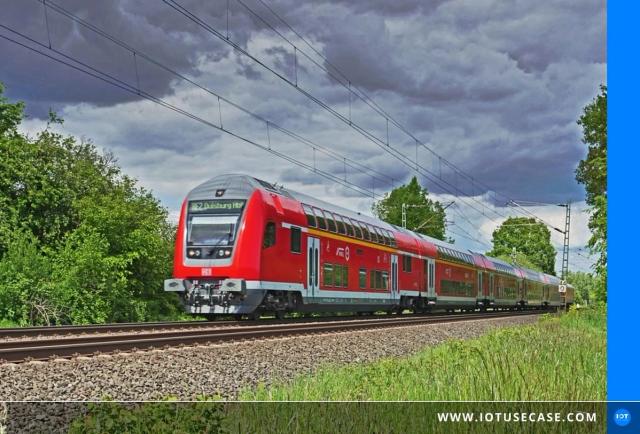




Railway spring: measure loads during operation
In the solution example, Trelleborg's ConeX3 system continuously measures all incoming movements and deformations. Contactless sensors record static and dynamic loads as well as temperature. A microcontroller processes the signals and passes them via CAN bus to the smartRAIL IoT device from optiMEAS. A dedicated Trelleborg module calculates the deformation of the spring from this data. Only these key values are sent via cellular network or Wi-Fi to optiCLOUD, which visualises them and allows remote firmware updates. GPS makes it possible to assign high loads to specific points on the line.
The example comes from transport and logistics. Trelleborg Industrial Antivibration Solutions manufactures vibration-damping rail components and launched the project with optiMEAS because fixed maintenance intervals bring vehicles into the depot that could still have kept running. There, the car body is lifted off and all wear parts are replaced. In the ongoing field trial, the system collects raw data to develop models of the service life of the spring and adjacent components. Podcast episode #35 explains how optiMEAS and Trelleborg turn components themselves into sensors.
Podcast episodes featuring Spring
Railway springs: frequently asked questions
How can the load on a spring be measured in operation?
Contactless sensors record static and dynamic loads directly on the component, along with temperature. In Trelleborg's ConeX3 system, the sensors continuously capture all incoming movements and deformations. A calculation module on the smartRAIL IoT device derives the deformation of the spring from these readings. The result is a picture of the actual load in the field rather than an assumption from the maintenance plan.
How does spring data help with bogie maintenance?
The data shows whether a vehicle really needs maintenance or can keep running. Until now, maintenance intervals have been fixed: in the depot, the car body is lifted off and all wear parts are replaced. Real-time data from ConeX3 provides the basis for condition-based maintenance. According to optiMEAS, replacement intervals and service can also be optimised this way.
Why do springs in rail vehicles wear?
Springs and other vibration-damping components are permanently exposed to high forces that cause wear. For rubber components, the limited service life of the material adds to this, as it ages further due to climate and dirt. These parts decouple the car body from the bogie, wheelsets and track. That is why vehicles are regularly taken out of service for maintenance.
Can the service life of a rubber spring be predicted?
That is the aim of the ongoing field trial by Trelleborg and optiMEAS. The system records as much raw data as possible, analyses signal patterns and detects deviations. From this, models of the service life of the spring and adjacent components such as dampers, couplings and bogie frames are to be developed. Podcast episode #35 explains that service life can be calculated from the actual load in the field.
More assets in “Components & Devices”

Filter
Filter monitoring with IoT measures the differential pressure across a filter and shows how dirty it is. Operators change filters when it is actually necessary, avoid clogged filters and downtime, and save energy and material.

Energy chain
An energy chain with IoT sensors continuously reports the condition of the cable management on moving machinery. Operators learn about overload, blockages or chain breakage before the machine stops, and plan chain replacement according to actual use.

Lighting
Commercial lighting control with IoT adjusts the lighting in offices, halls, shops and advertising installations according to occupancy, brightness and schedules, and monitors every luminaire remotely. Operators cut electricity consumption and learn about failures immediately.

Electricity meter
Automatic meter reading means that electricity meter readings reach a platform via radio, cellular network or pulse adapter, with no on-site reading. Operators bill more accurately and see where energy is consumed in a building or in production.

Charging station
Commercial EV charging relies on load management that distributes the available power across all charging stations at a site and monitors them remotely. Operators avoid overloading the grid connection, integrate photovoltaics and storage, and bill sessions automatically.

Piping network
Pipeline monitoring with IoT reports pressure drops, pressure peaks and moisture under insulation in a piping network before they turn into failures. Operators maintain pipes according to their condition and avoid inspection rounds to hard-to-reach measuring points.
IIoT Use Case user group
What no project tells you
What did the project cost? Which sensor didn't survive in the field? How did you get maintenance on board? 300+ industrial users discuss questions like these with each other every month, openly and without vendors in the room.
Frequent topics in these projects, bring your questions:
- Condition Monitoring
Online every month
Alternating tech and business focus
Users only
No sales pitches, exchange under NDA
300+ members
OT, IT and IIoT leads from industry
