Ship
A ship pump often runs for many hours on board and consumes a great deal of energy. With IoT, pumps are controlled based on data, so shipping companies save energy, reduce wear and document compliance with IMO CO₂ requirements.
Ship at a glance
Most frequent in the projects on this page
Users in these projects

Verified projects featuring Ship



Data-driven ship pump control that saves energy
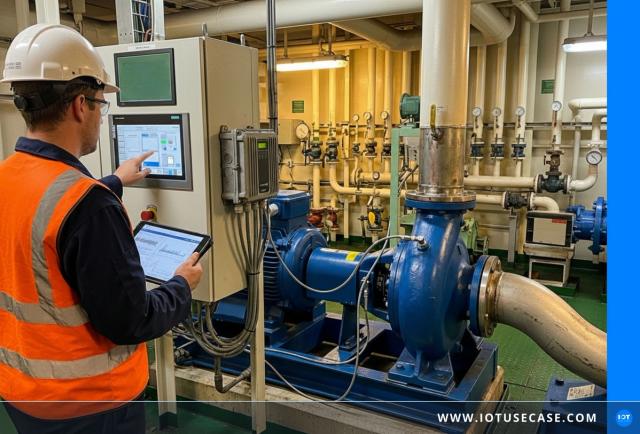
In the solution example, all process and control data from the pumps comes together in the PLC and is transferred via serial interfaces to EXOR hardware. The JMobile software of the X Platform collects the values directly at the pump, displays them graphically and summarises them in reports. Because of cybersecurity requirements on board and the poor internet connection at sea, there is no external access: the data is stored locally and the crew exports it via USB stick. Ashore, the log files are analysed in Excel or MATLAB.
The example comes from mechanical engineering and shipping. BESI Marine Systems, a specialist in flow management on ships, developed the Pump Energy Saving System PES together with EXOR. It controls pumps for ballast water, cooling water, fuel or cargo efficiently and provides the CO₂ evidence required by the Energy Efficiency Existing Ship Index (EEXI). Because the pumps run at reduced speeds, wear falls, and shipping companies can maintain them based on condition rather than at fixed intervals. In podcast episode 183, BESI and EXOR Deutschland explain how they divide the work between system integration and IoT infrastructure.
Podcast episodes featuring Ship
Ship pumps and IoT: frequently asked questions
How do ship pumps help meet EEXI requirements?
Energy-efficient pump control reduces consumption on board and supplies the data for documentation. With the Energy Efficiency Existing Ship Index, the IMO has introduced binding rules that oblige shipping companies to cut their CO₂ emissions every year. Optimised propellers or new bow shapes are no longer enough. The Pump Energy Saving System from BESI and EXOR documents the savings achieved at the pumps.
Where can a ship save energy in technical operations?
Pumps are a major lever because they move large volumes of liquid and run for many hours. This ranges from ballast water for stability to cooling water, fuel and cargo. BESI Marine Systems controls these pumps based on data and at reduced speeds. This lowers energy consumption and mechanical wear at the same time, which cuts operating costs and increases reliability.
How is operating data captured securely on a ship?
The data is captured and stored locally on board, without direct external access. Ship systems are isolated because of strict cybersecurity requirements, and at sea there is usually no connection or only a weak satellite link. In the BESI and EXOR system, the crew exports the data via USB stick. This may seem old-fashioned, but it ensures tamper protection and data sovereignty while analysis takes place ashore.
Is demand-based control of ballast water pumps worthwhile?
Yes, because ballast water pumps are among the pumps that run for long periods on board and wear in the process. The Pump Energy Saving System PES from BESI Marine Systems controls them efficiently, like the other ship pumps. Until now, pumps were serviced at fixed intervals regardless of how heavily they were actually used. Reduced speeds lower wear, and maintenance can be planned according to condition.
More assets in “Means of Transport”

Car
Fleet management with IoT automatically records the trips, locations and operating times of every car in a company fleet. Businesses no longer need handwritten logbooks, plan routes faster and keep a clean record of business and private trips.

Truck
Truck tracking with IoT connects every truck to head office and delivers position, operating status and vehicle data in real time. Digital controls and documentation during loading and unloading also reduce manual entries for dispatchers, drivers and shippers.

Track infrastructure
Railway track maintenance becomes more targeted when IoT sensors on the track infrastructure supply weather data, axle counter diagnostics and loads from train operation. Operators avoid unnecessary line closures and plan work on tracks and switches more precisely.

Commercial vehicle
In a software defined vehicle, commercial vehicle software is rolled out and updated remotely rather than in the workshop. Manufacturers maintain one consistent software stack for the whole connected fleet, and an update no longer resembles a recall.
Delivery vehicle
Van telematics with a driver app connects every delivery vehicle to the dispatch office. Dispatchers see in real time which stops are done and warn customers of delays without calling the driver.
Freight wagon
Railcar tracking with IoT locates freight wagons that have no power supply of their own: self-powered trackers report position, movement, shocks and temperature throughout the journey. Dispatchers plan wagons better, customers receive arrival times, and maintenance follows actual use.
IIoT Use Case user group
What no project tells you
What did the project cost? Which sensor didn't survive in the field? How did you get maintenance on board? 300+ industrial users discuss questions like these with each other every month, openly and without vendors in the room.
Frequent topics in these projects, bring your questions:
- Condition Monitoring
- Energy Monitoring
- Predictive Maintenance
Online every month
Alternating tech and business focus
Users only
No sales pitches, exchange under NDA
300+ members
OT, IT and IIoT leads from industry