Commercial vehicle
In a software defined vehicle, commercial vehicle software is rolled out and updated remotely rather than in the workshop. Manufacturers maintain one consistent software stack for the whole connected fleet, and an update no longer resembles a recall.
Commercial vehicle at a glance
Most frequent in the projects on this page
Industries
Users in these projects


Verified projects featuring Commercial vehicle




Software defined vehicle: remote updates for commercial vehicles
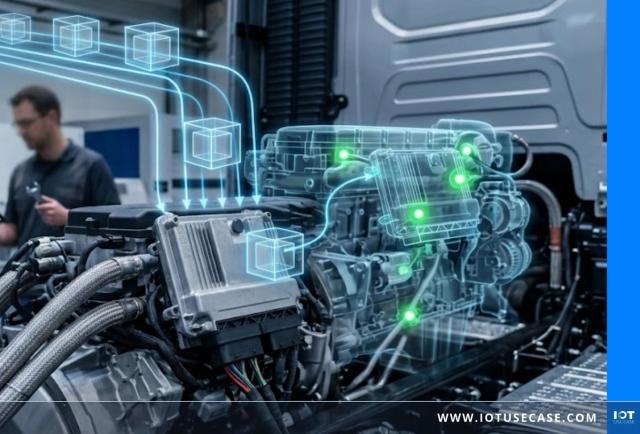
Cummins separates the application layer of its powertrains from the operating system using OCI containers. The containers run on embedded Linux devices mounted directly on the engine, which communicate with the engine control unit. Portainer Business Edition orchestrates them remotely using a server-agent architecture; Portainer.io redeveloped the agent to cope with low bandwidth, high latency and recurring network drop-outs in moving vehicles. Updates arrive securely, atomically and fail-safe. Using the same orchestrator, Cummins also updates the Linux operating system of the edge device and the software of the engine control unit, which has no connectivity of its own. A central overview shows the status and deployments of all devices.
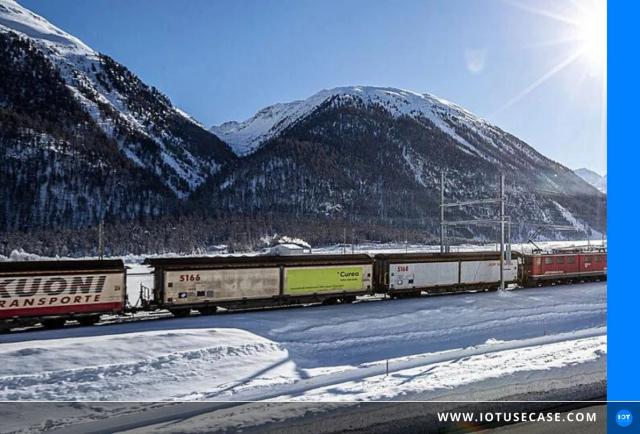
Cummins supplies diesel and electrified powertrains to more than 100 major OEMs, including PACCAR DAF, Daimler Trucks and the TRATON GROUP. With Portainer.io, the company reduced its telematics software from 35 variants to one, and the new system went into production on schedule. Cummins contributes its experience to the Eclipse Software Defined Vehicle Working Group and to COVESA; podcast episode #189 tells the story. At Rhätische Bahn, A1 Digital trackers also send the position and condition of infrastructure vehicles to an IoT platform.
Podcast episodes featuring Commercial vehicle
Software defined vehicles: frequently asked questions
How do over-the-air updates work for commercial vehicles?
Over-the-air updates deliver new software to commercial vehicles via the cellular network, without anyone having to touch the device. At Cummins, the software runs as an OCI container on an embedded Linux device on the engine. Portainer Business Edition distributes the containers via a server, and an agent on the device receives the instructions. Updates arrive securely, atomically and fail-safe, even if the cellular connection drops while the vehicle is moving.
How is software rolled out to connected commercial vehicles from different OEMs?
Software can be rolled out across manufacturers when it is provided as a container that is independent of the hardware. Cummins used to maintain the same edge and connectivity functions separately for 35 partner environments. Today, each partner receives one OCI container for its connectivity device, and Portainer.io distributes it remotely. To support hundreds of thousands of devices communicating at the same time, Portainer.io redesigned key parts of its architecture.
How does a remote ECU update reach a commercial vehicle?
At Cummins, an ECU software update reaches the vehicle via an embedded Linux device mounted on the engine. This edge device communicates with the engine control unit and runs the containers with the connectivity functions. Because the engine control unit has no connectivity of its own, it receives its updates through the edge device. Cummins has published this approach on IP.com under the title “Updating Embedded Linux OS Using OCI Container Technology”.
How does modular commercial vehicle software reduce costs?
Modular vehicle software reduces costs because new functions no longer have to be integrated and tested separately for each supplier environment. Cummins cut its software variants from 35 to one. The new system went into production on schedule, whereas its proprietary predecessor had not delivered all planned functions after two years. OEM partners also no longer need to coordinate with many different suppliers and software packages.
More assets in “Means of Transport”

Car
Fleet management with IoT automatically records the trips, locations and operating times of every car in a company fleet. Businesses no longer need handwritten logbooks, plan routes faster and keep a clean record of business and private trips.

Truck
Truck tracking with IoT connects every truck to head office and delivers position, operating status and vehicle data in real time. Digital controls and documentation during loading and unloading also reduce manual entries for dispatchers, drivers and shippers.

Track infrastructure
Railway track maintenance becomes more targeted when IoT sensors on the track infrastructure supply weather data, axle counter diagnostics and loads from train operation. Operators avoid unnecessary line closures and plan work on tracks and switches more precisely.
Delivery vehicle
Van telematics with a driver app connects every delivery vehicle to the dispatch office. Dispatchers see in real time which stops are done and warn customers of delays without calling the driver.
Freight wagon
Railcar tracking with IoT locates freight wagons that have no power supply of their own: self-powered trackers report position, movement, shocks and temperature throughout the journey. Dispatchers plan wagons better, customers receive arrival times, and maintenance follows actual use.
Semi-trailer
Trailer telematics makes every semi-trailer locatable and sends condition and maintenance data to the cloud. Silo trailers can also be controlled digitally, so drivers unload faster and more safely and loading operations are documented digitally.
IIoT Use Case user group
What no project tells you
What did the project cost? Which sensor didn't survive in the field? How did you get maintenance on board? 300+ industrial users discuss questions like these with each other every month, openly and without vendors in the room.
Frequent topics in these projects, bring your questions:
- Asset Tracking/ Track and Trace
- Fleet Management
Online every month
Alternating tech and business focus
Users only
No sales pitches, exchange under NDA
300+ members
OT, IT and IIoT leads from industry