Semi-trailer
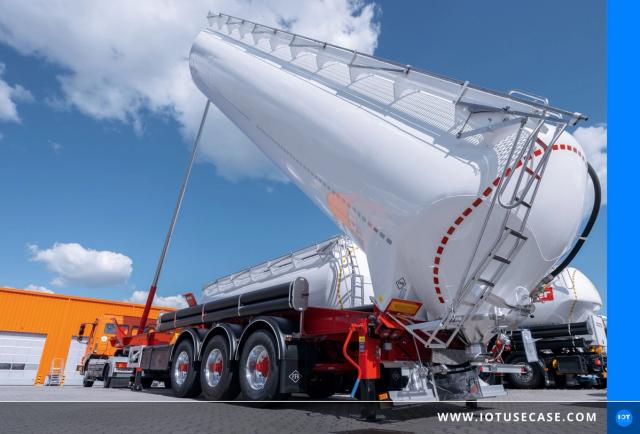
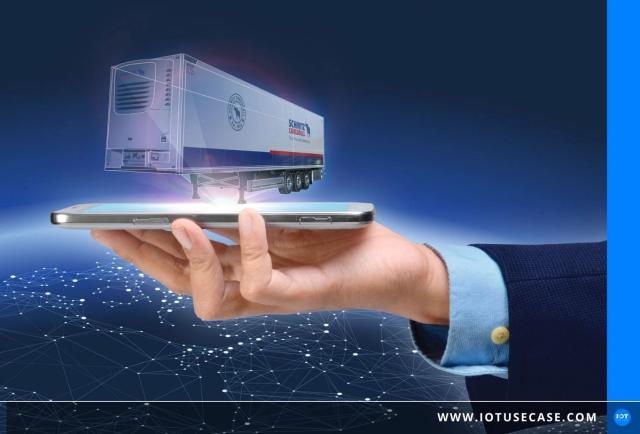
Trailer telematics makes every semi-trailer locatable and sends condition and maintenance data to the cloud. Silo trailers can also be controlled digitally, so drivers unload faster and more safely and loading operations are documented digitally.
Semi-trailer at a glance
Most frequent in the projects on this page
Industries
Technologies
Users in these projects


Verified projects featuring Semi-trailer




Trailer telematics and digital control for semi-trailers
At Schmitz Cargobull, a telematics module with a SIM card transmits each trailer's data, encrypted, to Microsoft Azure. Services such as IoT Hub and Stream Analytics process it, a data lake combines separate data sources, and rarely used data is moved automatically to cheaper cold storage after around 180 days. Feldbinder controls its silo vehicles with components from ifm: the ecomatDisplay with a 12-inch touchscreen contains the controller, programmable with CODESYS, and up to five ioControl modules collect sensor data and pass it on via CAN bus. Geofencing, code scanners and RFID support loading and unloading, and an interface for CAN bus, GSM, Wi-Fi and Bluetooth hands the data over to dispatch and billing systems.
The examples come from transport and logistics and from vehicle manufacturing. Schmitz Cargobull now fits every trailer with a telematics unit; haulage companies locate their goods through the portal and receive key data in their ERP systems. In podcast episode #50, Michael Schöller of Schmitz Cargobull explains how temperature and position data prove the cold chain. Feldbinder and ifm implemented the Silo 4.0 project: the driver operates shut-off valves and air distribution centrally from the display instead of walking around the vehicle. Customers value faster unloading, and even inexperienced drivers operate it safely.
Podcast episodes featuring Semi-trailer
Trailer telematics and semi-trailers: frequently asked questions
How does telematics work in a refrigerated trailer?
In a refrigerated trailer, a telematics module records the temperature and position of the cargo and sends them, encrypted, to the cloud via a SIM card. At Schmitz Cargobull, refrigerated trailers have this unit fitted before they leave the factory. The data is processed on Microsoft Azure and prepared for the haulage company, which also owns it. This makes it possible to monitor cold chain compliance without time-consuming and error-prone manual processes.
How is a bulk silo trailer unloaded digitally?
On a digitally controlled silo vehicle, the driver operates all shut-off valves and the air distribution centrally from a display. For this purpose, Feldbinder and ifm combined all formerly mechanical, pneumatic and electromechanical controls into a single unit, including the remote control of the tractor unit. A database stores customer data, product data and unloading parameters, so that the know-how of experienced drivers is available across the company.
What does semi-trailer tracking offer haulage companies?
Semi-trailer tracking gives haulage companies a single view of the location, cargo and data of their trailers. At Schmitz Cargobull, customers use a portal on Microsoft Azure to retrieve relevant key figures, locate their goods and optimise business processes. Key data flows seamlessly into customers' ERP systems. The data belongs to the haulage company, and Schmitz Cargobull develops the custom software in-house.
How are loading operations documented on a bulk tanker trailer?
Loading operations are recorded directly in the vehicle controller and handed over digitally to dispatch and billing systems. In the past, the driver had to document every loading operation as required, usually by hand. In the Silo 4.0 project by Feldbinder and ifm, an integrated interface for CAN bus, GSM, Wi-Fi and Bluetooth takes over this task, and the data is available across the company via the cloud. Geofencing, code scanners and RFID prevent mistakes.
More assets in “Means of Transport”

Car
Fleet management with IoT automatically records the trips, locations and operating times of every car in a company fleet. Businesses no longer need handwritten logbooks, plan routes faster and keep a clean record of business and private trips.

Truck
Truck tracking with IoT connects every truck to head office and delivers position, operating status and vehicle data in real time. Digital controls and documentation during loading and unloading also reduce manual entries for dispatchers, drivers and shippers.

Track infrastructure
Railway track maintenance becomes more targeted when IoT sensors on the track infrastructure supply weather data, axle counter diagnostics and loads from train operation. Operators avoid unnecessary line closures and plan work on tracks and switches more precisely.
Commercial vehicle
In a software defined vehicle, commercial vehicle software is rolled out and updated remotely rather than in the workshop. Manufacturers maintain one consistent software stack for the whole connected fleet, and an update no longer resembles a recall.
Delivery vehicle
Van telematics with a driver app connects every delivery vehicle to the dispatch office. Dispatchers see in real time which stops are done and warn customers of delays without calling the driver.
Freight wagon
Railcar tracking with IoT locates freight wagons that have no power supply of their own: self-powered trackers report position, movement, shocks and temperature throughout the journey. Dispatchers plan wagons better, customers receive arrival times, and maintenance follows actual use.
IIoT Use Case user group
What no project tells you
What did the project cost? Which sensor didn't survive in the field? How did you get maintenance on board? 300+ industrial users discuss questions like these with each other every month, openly and without vendors in the room.
Frequent topics in these projects, bring your questions:
- Fleet Management
- Digital Documentation
Online every month
Alternating tech and business focus
Users only
No sales pitches, exchange under NDA
300+ members
OT, IT and IIoT leads from industry