Power distribution grid
Grid monitoring with IoT sensors records voltages, currents and temperatures in the low-voltage power distribution grid, so operators see its load in real time. They intervene early in case of overload and prepare for load management under Section 14a EnWG.
Power distribution grid at a glance
Most frequent in the projects on this page
Industries
Technologies
Users in these projects


Verified projects featuring Power distribution grid
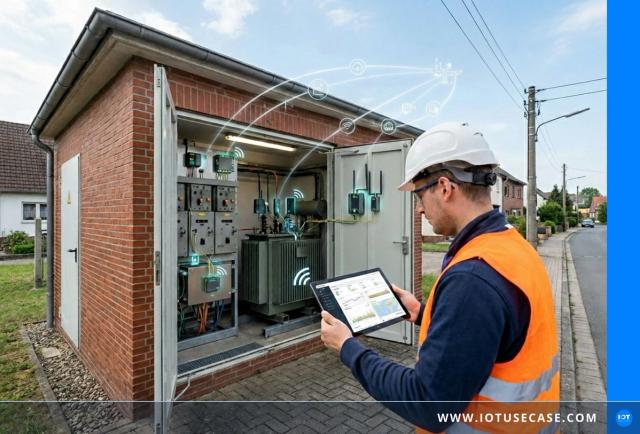










Grid monitoring for low-voltage networks: load in real time
At Regionetz, local grid stations were fitted with sensors for this purpose. The readings are sent via MQTT to a HiveMQ broker, and certificate management set up with ECOS secures the communication paths. An Apache Kafka instance handles data streaming and acts as the central data hub, so new business systems can be connected without point-to-point interfaces. On the IoTnova IoT platform, specialist departments design their own dashboards and spot wiring errors faster. Downstream systems use the data for the Section 14a functions and for the digital twin of the grid. To keep the smart grid secure, passive OT monitoring also checks communication in the control system for anomalies.
Both examples come from energy supply. Regionetz and it-novum started a proof of concept that ran for over a year and then went into production, even though there was no IoT experience at the outset. Next steps include a second HiveMQ instance for geo-redundancy and sensors in further grid stations. MEGA in Monheim am Rhein operates a smart grid with hundreds of local substations and protects its control system with Rhebo's attack detection system. Within the first weeks, outdated protocols and firmware versions were discovered and removed.
Grid monitoring: frequently asked questions
How can utilities detect high grid load at low-voltage level?
Utilities detect high grid load when sensors in the grid stations continuously report voltages, currents and temperatures. Regionetz uses this data to build a digital twin of the low-voltage network that shows grid load in real time. This makes it possible to spot overloads early and take countermeasures. Analysing the sensor data also enables proactive fault detection and increases operational reliability.
Which grid monitoring data does a DSO need for Section 14a EnWG?
For control under Section 14a of the German Energy Industry Act, a DSO needs real-time data on the load in the low-voltage network. At Regionetz, sensors in the grid stations provide these values, and Kafka passes them on to downstream systems that implement the Section 14a functions. The architecture is scalable and designed to comply with Section 14a. According to the project report, the goals of digital grid monitoring and preparing for Section 14a-compliant load management were achieved.
Which values does LV network monitoring record?
LV network monitoring uses sensors in the grid stations that measure voltages, currents and temperatures as condition data for the network. At Regionetz, these values are sent via MQTT to a HiveMQ broker and on to the IoTnova platform. There, users continuously check data quality, find sources of error such as wiring faults faster and see grid load early. The communication paths are secured by certificate management set up together with partner company ECOS.
How can a grid operator build a grid digital twin without IoT experience?
Regionetz digitalised its distribution grid without any in-house IoT experience by starting with a proof of concept. It began with a two-day workshop with it-novum to define requirements and use cases. During the PoC, which ran for over a year, the team tested system components, communication protocols and the visualisation platform. The positive results led to production use, and training, workshops and close cooperation with the partner built up the necessary know-how.
More assets in “Components & Devices”

Filter
Filter monitoring with IoT measures the differential pressure across a filter and shows how dirty it is. Operators change filters when it is actually necessary, avoid clogged filters and downtime, and save energy and material.

Energy chain
An energy chain with IoT sensors continuously reports the condition of the cable management on moving machinery. Operators learn about overload, blockages or chain breakage before the machine stops, and plan chain replacement according to actual use.

Lighting
Commercial lighting control with IoT adjusts the lighting in offices, halls, shops and advertising installations according to occupancy, brightness and schedules, and monitors every luminaire remotely. Operators cut electricity consumption and learn about failures immediately.

Electricity meter
Automatic meter reading means that electricity meter readings reach a platform via radio, cellular network or pulse adapter, with no on-site reading. Operators bill more accurately and see where energy is consumed in a building or in production.

Charging station
Commercial EV charging relies on load management that distributes the available power across all charging stations at a site and monitors them remotely. Operators avoid overloading the grid connection, integrate photovoltaics and storage, and bill sessions automatically.

Piping network
Pipeline monitoring with IoT reports pressure drops, pressure peaks and moisture under insulation in a piping network before they turn into failures. Operators maintain pipes according to their condition and avoid inspection rounds to hard-to-reach measuring points.
IIoT Use Case user group
What no project tells you
What did the project cost? Which sensor didn't survive in the field? How did you get maintenance on board? 300+ industrial users discuss questions like these with each other every month, openly and without vendors in the room.
Frequent topics in these projects, bring your questions:
- Condition Monitoring
- Energy Monitoring
- Fraud and Loss Prevention
Online every month
Alternating tech and business focus
Users only
No sales pitches, exchange under NDA
300+ members
OT, IT and IIoT leads from industry