

Pallet rack
Mobile pallet racking can fail without warning if wear goes unnoticed. With IoT, the racks continuously report operating hours, error codes and wear indicators to service.
Pallet rack at a glance
Most frequent in the projects on this page
Users in these projects

Verified projects featuring Pallet rack
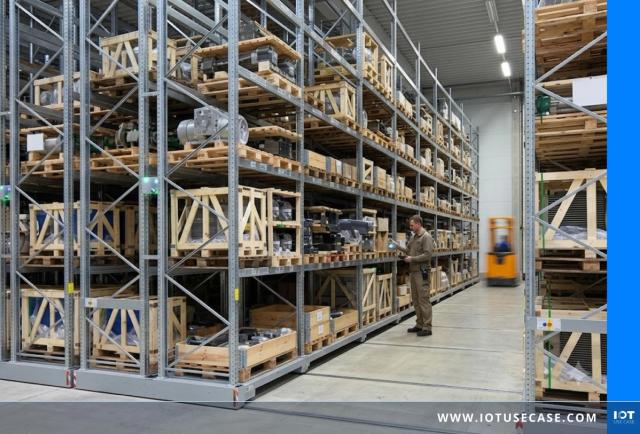



Mobile pallet racking with IoT: preventing downtime
In the solution example, the Cumulocity IoT platform links the racks' sensors and controllers with the manufacturer's business systems. It records operating hours, error codes, energy figures and wear indicators. Telemetry is normalised and visualised in real-time dashboards. Rules and event logic automatically raise tickets or alarms, for example when electronic faults recur. The platform is integrated with the Mobile Field Report planning software, which handles tickets, service planning and maintenance scheduling. Multi-tenancy and role-based access keep customer environments separate.
The example comes from mechanical and plant engineering, with early damage detection and utilisation tracking as use cases. Storage technology manufacturer Dexion connects its MOVO mobile racking system with Cumulocity. Dexion previously relied on regular maintenance with checklists, but problems arising between service visits remained invisible. Now potential failures can be spotted earlier, remote diagnostics save on-site troubleshooting, and technicians set off with the right spare parts. Complete histories and threshold alarms help customers demonstrate safety and compliance. Usage data feeds into design, software and firmware.
Mobile pallet racking: frequently asked questions
How do remote diagnostics work for mobile pallet racking?
The racks send error codes, operating hours and wear indicators to an IoT platform, and service evaluates them remotely. At Dexion, Cumulocity does this for the MOVO mobile racking system. Traditional service calls often required troubleshooting on site. Now the right spare parts and technicians are determined before setting off, and service calls can be planned more precisely.
Does IoT monitoring replace pallet racking inspection?
No, it complements it. Dexion keeps regular maintenance with structured checklists and uses continuous monitoring to close the gap between service visits. For evidence, the connected MOVO racks provide event and condition logs, threshold alarms and a traceable history. This matters especially in safety-critical environments where customers have to demonstrate safety and compliance.
Which service models does connected pallet racking enable?
Predictable maintenance and, in future, performance- and usage-based service packages. Dexion uses the operating data from its MOVO system to move from being a storage systems supplier to a provider of data-based services. Higher availability and faster support strengthen customer loyalty. Real usage and fault data also feed into improving product quality, design, software and firmware.
What data does a mobile racking system provide?
Operating hours, error codes, energy figures and wear indicators. For Dexion's MOVO system, Cumulocity collects these values from sensors and controllers, normalises them and displays them on real-time dashboards. Built-in rules automatically raise tickets or alarms when predefined conditions occur, such as recurring electronic faults. The tickets then flow into the Mobile Field Report planning software.
More assets in “Conveying and Handling Technology”

Automated guided vehicle (AGV)
An AGV system brings material automatically from the warehouse to the line when a central fleet controller coordinates the automated guided vehicles (AGV). With IoT, sensors trigger transport orders and vehicles from different manufacturers run in one system.

Crane
Predictive crane maintenance with IoT focuses on the cable carrier, which guides power and data cables to the trolley. Sensors report overload or breakage before the crane comes to a standstill and give maintenance and replacement recommendations.

Industrial robot
Predictive robot maintenance with IoT brings the condition and performance data of industrial robots together on one platform. Operators detect faults and wear before a robot comes to a standstill, and manufacturers identify maintenance cases remotely.

Conveyor belt
Conveyor belt maintenance with IoT relies on sensors that capture vibration, temperature and the condition of the belt and belt cleaners. Operators detect damage such as a torn belt early, plan maintenance as needed and avoid costly line stoppages.
Forklift truck
Forklift tracking with IoT shows where every forklift truck is, which pallet it carries and where that pallet belongs. RFID, UWB and cameras replace manual scanning and document putaway, retrieval and loading automatically.
High-bay warehouse
In a high-bay warehouse, IoT links storage locations, forklifts and warehouse management through real-time data. Staff see on large screens which orders are due next, and pallets are put away and retrieved without manual scanning.
IIoT Use Case user group
What no project tells you
What did the project cost? Which sensor didn't survive in the field? How did you get maintenance on board? 300+ industrial users discuss questions like these with each other every month, openly and without vendors in the room.
Frequent topics in these projects, bring your questions:
- Condition Monitoring
- Corrective maintenance
Online every month
Alternating tech and business focus
Users only
No sales pitches, exchange under NDA
300+ members
OT, IT and IIoT leads from industry
