Order picking robot
A warehouse picking robot grips parcels, bags and boxes it has never seen before. Cameras and software recognise each object and calculate a suitable gripping position, so the robot can pick, pack and load or unload lorries reliably.
Order picking robot at a glance
Most frequent in the projects on this page
Use cases
Industries
Users in these projects

Verified projects featuring Order picking robot
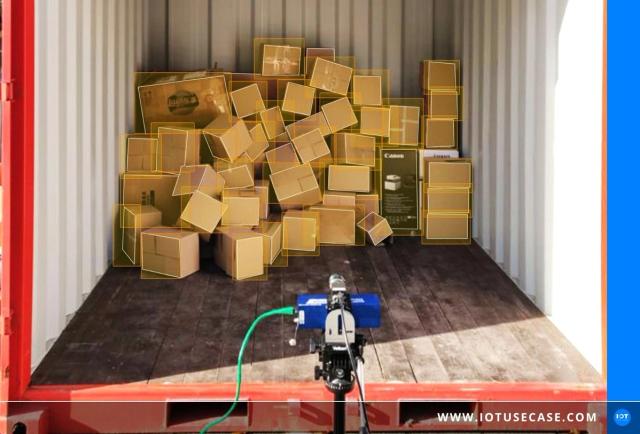



Warehouse picking robot with machine vision
In the solution example, an IDS uEye CP camera first captures the goods as a 2D image. An algorithm assigns the objects to classes such as box, bag, envelope, tube or cylinder, even when they vary widely in shape, size, colour and material. An Ensenso camera also creates a 3D point cloud containing all spatial coordinates. The software combines both images, analyses the surfaces and proposes the best gripping position to the robot. With six degrees of freedom, it performs more than 100 grasp poses per second.
The example comes from logistics, and the use case is object recognition in the material flow. Software company Fizyr developed a modular plug-and-play software that integrators can build into their own picking cell with a free choice of hardware. The starting conditions are tough: a lorry's load space is often dark, parcels overlap and are tightly stacked, glossy packaging reflects light and bags are transparent. The software also performs a quality check, so no damaged parcels end up on the sorter. According to the source, workplace safety improves and the low error rate lowers logistics costs. The user decides how far to automate, from individual tasks to fully unloading lorries.
Warehouse picking robots: frequently asked questions
What are the benefits of an order picking robot?
An order picking robot takes over repetitive gripping tasks and also works where light and visibility are poor. In the Fizyr and IDS example, workplace safety improves and the low error rate reduces logistics costs. Because the software detects damaged parcels, they do not end up on the sorter. Users decide for themselves whether to hand over individual tasks or automate entire processes such as unloading lorries.
How does robotic picking handle unknown objects?
The robot combines a 2D image with a 3D point cloud and lets software classify the objects. In the solution example, a uEye CP camera supplies the 2D image and an Ensenso camera the spatial coordinates. Fizyr's algorithm recognises boxes, bags, envelopes, tubes or cylinders it has not seen before, analyses their surfaces and proposes the best gripping position.
Can a robot unload lorries automatically?
Yes, with precise image processing an order picking robot can load and unload cargo areas. The load space is the hard part, because light is often poor and parcels overlap, are tightly stacked, glossy or transparent. Fizyr's software analyses images from IDS cameras for this and calculates the gripping position. A wide camera field of view and high camera speed give the robot short reaction times.
Can the same robot handle robotic depalletising?
Yes, in the solution example depalletising is one of its tasks alongside picking, palletising and handling a wide range of parcels. This works because the software recalculates every gripping position from camera images instead of moving to fixed positions. The robot needs many degrees of freedom for this, six in the example, and performs dozens of grasp positions per second. Integrators choose the hardware for their cell freely.
More assets in “Conveying and Handling Technology”

Automated guided vehicle (AGV)
An AGV system brings material automatically from the warehouse to the line when a central fleet controller coordinates the automated guided vehicles (AGV). With IoT, sensors trigger transport orders and vehicles from different manufacturers run in one system.

Crane
Predictive crane maintenance with IoT focuses on the cable carrier, which guides power and data cables to the trolley. Sensors report overload or breakage before the crane comes to a standstill and give maintenance and replacement recommendations.

Industrial robot
Predictive robot maintenance with IoT brings the condition and performance data of industrial robots together on one platform. Operators detect faults and wear before a robot comes to a standstill, and manufacturers identify maintenance cases remotely.

Conveyor belt
Conveyor belt maintenance with IoT relies on sensors that capture vibration, temperature and the condition of the belt and belt cleaners. Operators detect damage such as a torn belt early, plan maintenance as needed and avoid costly line stoppages.
Forklift truck
Forklift tracking with IoT shows where every forklift truck is, which pallet it carries and where that pallet belongs. RFID, UWB and cameras replace manual scanning and document putaway, retrieval and loading automatically.

High-bay warehouse
In a high-bay warehouse, IoT links storage locations, forklifts and warehouse management through real-time data. Staff see on large screens which orders are due next, and pallets are put away and retrieved without manual scanning.
IIoT Use Case user group
What no project tells you
What did the project cost? Which sensor didn't survive in the field? How did you get maintenance on board? 300+ industrial users discuss questions like these with each other every month, openly and without vendors in the room.
Frequent topics in these projects, bring your questions:
- Employee Safety
- Quality Management
Online every month
Alternating tech and business focus
Users only
No sales pitches, exchange under NDA
300+ members
OT, IT and IIoT leads from industry