Industrial truck
Industrial truck localisation by radio shows where materials, load carriers and vehicles are. Search times fall, empty runs become rarer, and bookings happen automatically as soon as a vehicle reaches a defined zone.
Industrial truck at a glance
Most frequent in the projects on this page
Verified projects featuring Industrial truck
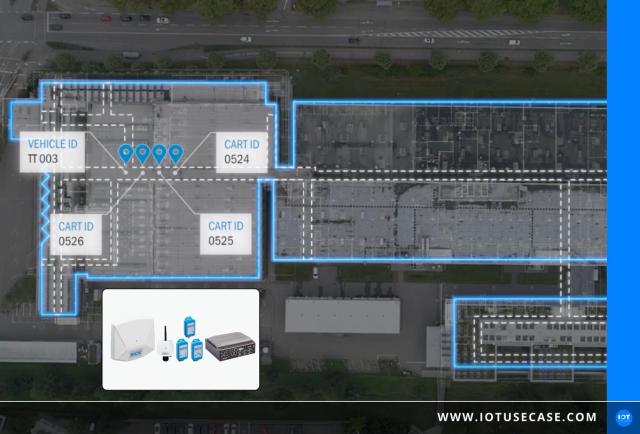




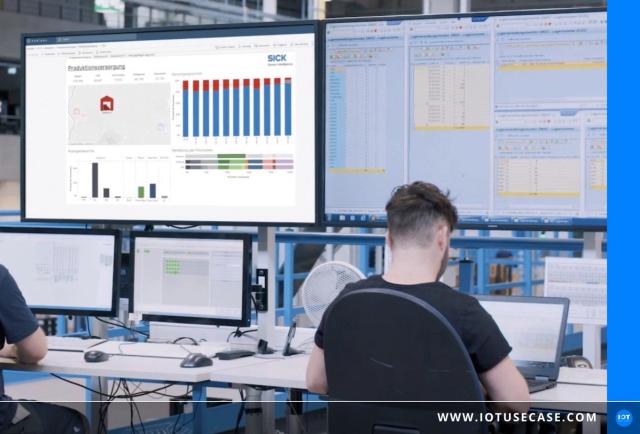

Industrial truck localisation: follow material flow in real time
The SICK solution examples use ultra-wideband: tags on vehicles and objects send signals to antennas in the hall, and a central localisation platform calculates their position. The LOCU system operates in the 3.1 to 10.6 GHz frequency band with a range of around 20 to 50 metres, locates to within less than one metre and updates up to 1,000 times per second. With geofencing, virtual zones trigger notifications or ERP postings. The Asset Analytics software shows movement profiles as well as transport and idle times, with connections to ERP, MES or the SAP Logistics Business Network.
The examples come from mechanical engineering as well as transport and logistics. With SmaRTLog, SICK tracks material between warehouse and production sites, even after it has left the fixed assembly line or conveyor on an industrial truck. Lead time fell by 20 percent, search time for missing materials dropped from 45 to 15 minutes, and overall equipment effectiveness rose by ten to 20 percent. In podcast episode #138, Marcel Scheidig of C. Jentner explains how the company tracks workpiece carriers and industrial trucks in electroplating; episode #73 with Roland Avar of SICK adds further business cases.
Podcast episodes featuring Industrial truck
Industrial truck localisation: frequently asked questions
Which material handling vehicles can be tracked by radio?
Any vehicle or means of transport fitted with a UWB tag. SICK recommends direct localisation with a dedicated tag especially for large, high-value assets such as means of transport or pallets. With LOCU, industrial trucks, transport aids and goods are located to within less than one metre. At C. Jentner, the Tag-LOC system tracks workpiece carriers and industrial trucks in electroplating, an environment where RFID reaches its limits.
How does industrial truck monitoring trigger bookings automatically?
Through virtual zones: as soon as a vehicle or object enters or leaves a zone, a follow-up process starts automatically. These can be notifications, work processes or ERP postings. At SICK, the system sends events to the SAP Logistics Business Network when trolleys pass through defined warehouse zones. When a trolley is loaded onto a truck or arrives at the production site, the system automatically books the goods issue and goods receipt.
How does locating industrial trucks reduce empty runs and search times?
By locating industrial trucks and material by radio, even after they have left fixed conveying equipment. According to SICK, precise localisation shortens waiting times, reduces empty runs and optimises transport routes. Without localisation, goods disappear from view on their way through halls and aisles, and SICK staff had to check on site. Today, vehicles and transport aids carry UWB tags, and antennas in the hall receive their signals.
How much does locating industrial trucks shorten lead times?
At SICK, overall lead time fell by 20 percent after SmaRTLog was introduced. Search time for missing materials dropped from 45 to 15 minutes, a reduction of 66 percent. Manual bookings and scans are no longer needed, the data appears on dashboards and audits become simpler. Overall equipment effectiveness rose by ten to 20 percent because defective materials are easy to find and do not reach the next production step.
More assets in “Conveying and Handling Technology”
Automated guided vehicle (AGV)
An AGV system brings material automatically from the warehouse to the line when a central fleet controller coordinates the automated guided vehicles (AGV). With IoT, sensors trigger transport orders and vehicles from different manufacturers run in one system.

Crane
Predictive crane maintenance with IoT focuses on the cable carrier, which guides power and data cables to the trolley. Sensors report overload or breakage before the crane comes to a standstill and give maintenance and replacement recommendations.

Industrial robot
Predictive robot maintenance with IoT brings the condition and performance data of industrial robots together on one platform. Operators detect faults and wear before a robot comes to a standstill, and manufacturers identify maintenance cases remotely.

Conveyor belt
Conveyor belt maintenance with IoT relies on sensors that capture vibration, temperature and the condition of the belt and belt cleaners. Operators detect damage such as a torn belt early, plan maintenance as needed and avoid costly line stoppages.
Forklift truck
Forklift tracking with IoT shows where every forklift truck is, which pallet it carries and where that pallet belongs. RFID, UWB and cameras replace manual scanning and document putaway, retrieval and loading automatically.

High-bay warehouse
In a high-bay warehouse, IoT links storage locations, forklifts and warehouse management through real-time data. Staff see on large screens which orders are due next, and pallets are put away and retrieved without manual scanning.
IIoT Use Case user group
What no project tells you
What did the project cost? Which sensor didn't survive in the field? How did you get maintenance on board? 300+ industrial users discuss questions like these with each other every month, openly and without vendors in the room.
Frequent topics in these projects, bring your questions:
- Asset Tracking/ Track and Trace
- Traceability
- Asset Management
Online every month
Alternating tech and business focus
Users only
No sales pitches, exchange under NDA
300+ members
OT, IT and IIoT leads from industry