Gas distribution network
LDAR (leak detection and repair) under the EU methane regulation requires gas distribution network operators to measure and report methane emissions. IoT sensors at pressure regulating and metering stations replace occasional inspections with continuous measurement.
Gas distribution network at a glance
Most frequent in the projects on this page
Industries
Verified projects featuring Gas distribution network






LDAR in gas distribution networks: continuous methane measurement
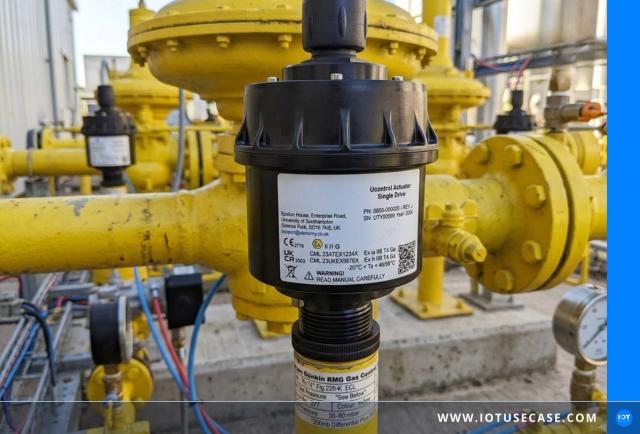
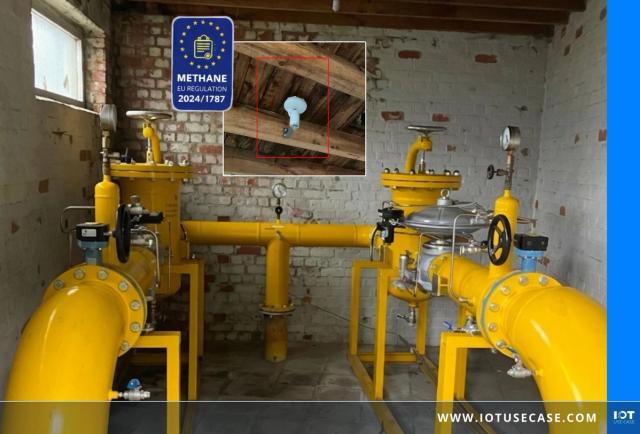
Honeywell's stationary Versatilis Signal Scout methane sensor measures the methane concentration in the ambient air as well as temperature, pressure and humidity. It responds to changes in the thermodynamic properties of the air and detects changes from around 50 ppm, depending on installation conditions. The battery-powered device is suitable for hazardous areas and transmits via LoRaWAN and MQTT to a software platform that locates leaks, calculates the emission rate and sends an email notification when limit values are exceeded. Another approach controls gas pressure in the network remotely using an electric actuator and telemetry, built on the Cumulocity IoT platform.
Both examples come from energy supply, as leak detection and emissions management. In a gas pressure regulating station, the Honeywell sensors detected a methane leak during maintenance work with a peak of over 13,000 ppm, and the amount released was calculated at around 145 grams. A technology company for smart gas networks replaces manual seasonal pressure adjustments with automated control; with Cumulocity, its proof of concept was ready within a few weeks. The first commercial implementation covers more than 270 operational sites. In podcast episode 217, Lausberger explains how municipal utilities retrofit existing networks with wireless sensors instead of reading pressure gauges in manholes.
Podcast episodes featuring Gas distribution network
LDAR in gas networks: frequently asked questions
What does the EU methane regulation require for LDAR?
The EU methane regulation requires operators to find and repair methane leaks under defined LDAR rules. It distinguishes two types of inspection: LDAR type 1 targets larger leaks from 7,000 ppm or 17 grams per hour, type 2 smaller leaks from around 500 ppm or one gram per hour. Above the threshold, a first repair attempt must be made within five days and the full repair completed within 30 days at the latest.
How does continuous methane leak detection work in a gas network?
For continuous leak detection, stationary methane sensors are permanently installed at gas pressure regulating and metering stations. Until now, municipal utilities have mostly checked their networks through manual inspections, which only capture individual points in time and tie up a lot of staff. Large cities such as Hamburg have more than 600 of these stations. Battery-powered sensors without cabling can be rolled out there quickly and report limit violations automatically by email.
How does methane emissions monitoring quantify a leak at a station?
Methane emissions can be quantified if the concentration is measured continuously together with ambient parameters. During a leak in a gas pressure regulating station, the Honeywell sensors recorded the entire course, from the rise to over 13,000 ppm to the decline after more than seven hours. From this, the amount released was calculated at around 145 grams. Temperature and humidity help to distinguish a real leak from normal fluctuations.
How can gas network pressure be controlled remotely?
Gas network pressure can be optimised remotely with electric actuators and telemetry instead of being adjusted manually by season. A technology company offers a solution for this that aims to reduce methane leaks, enable biomethane injection and lower operating costs. On the Cumulocity platform, an automated microservice adjusts gas pressure in real time. In future, third-party devices and customers' SCADA systems are also to be integrated.
More assets in “Components & Devices”

Filter
Filter monitoring with IoT measures the differential pressure across a filter and shows how dirty it is. Operators change filters when it is actually necessary, avoid clogged filters and downtime, and save energy and material.

Energy chain
An energy chain with IoT sensors continuously reports the condition of the cable management on moving machinery. Operators learn about overload, blockages or chain breakage before the machine stops, and plan chain replacement according to actual use.

Lighting
Commercial lighting control with IoT adjusts the lighting in offices, halls, shops and advertising installations according to occupancy, brightness and schedules, and monitors every luminaire remotely. Operators cut electricity consumption and learn about failures immediately.

Electricity meter
Automatic meter reading means that electricity meter readings reach a platform via radio, cellular network or pulse adapter, with no on-site reading. Operators bill more accurately and see where energy is consumed in a building or in production.

Charging station
Commercial EV charging relies on load management that distributes the available power across all charging stations at a site and monitors them remotely. Operators avoid overloading the grid connection, integrate photovoltaics and storage, and bill sessions automatically.

Piping network
Pipeline monitoring with IoT reports pressure drops, pressure peaks and moisture under insulation in a piping network before they turn into failures. Operators maintain pipes according to their condition and avoid inspection rounds to hard-to-reach measuring points.
IIoT Use Case user group
What no project tells you
What did the project cost? Which sensor didn't survive in the field? How did you get maintenance on board? 300+ industrial users discuss questions like these with each other every month, openly and without vendors in the room.
Frequent topics in these projects, bring your questions:
- Digital Documentation
- Condition Monitoring
- Corrective maintenance
Online every month
Alternating tech and business focus
Users only
No sales pitches, exchange under NDA
300+ members
OT, IT and IIoT leads from industry