Autonomous mobile robot (AMR)
An AMR robot, or autonomous mobile robot, needs a wireless link in the factory that is as reliable as a cable. Over a private 5G network it exchanges data with controllers and equipment in real time.
Autonomous mobile robot (AMR) at a glance
Most frequent in the projects on this page
Users in these projects

Verified projects featuring Autonomous mobile robot (AMR)
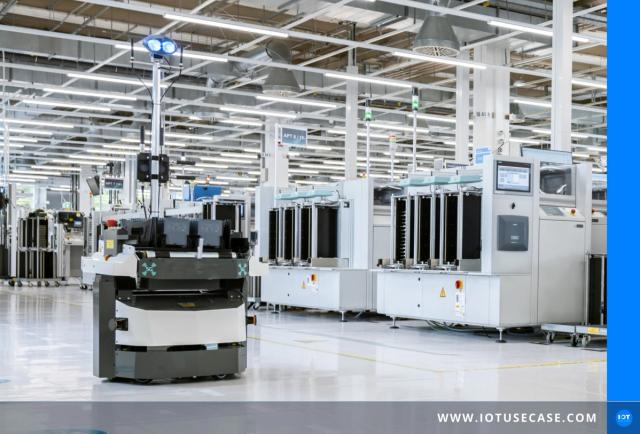





AMR robot with IoT: central control over private 5G
The Siemens solution consists of a 5G core and a radio access network. The core and parts of the RAN run on industrial PCs in a server room, and a fibre-optic link connects them to radio units across the site. The robots carry SCALANCE M industrial routers. Because PROFINET cannot run natively over 5G, Siemens transmits PROFINET IO through a VXLAN tunnel between router and firewall. This lets one central controller steer several mobile participants, so the vehicles no longer need local controllers.
The example comes from automation, and the use case is efficient material supply. Siemens trialled its private 5G solution at its own plant in Karlsruhe. There, autonomous mobile robots support material logistics and communicate via the Siemens infrastructure in the private 5G network. The benefit of central control: engineering and maintenance effort fall, and less space is needed on the mobile participants. The network uses licensed spectrum that companies apply for from the Federal Network Agency for their own site. As a result, several applications on the same network do not interfere with each other, unlike licence-free Wi-Fi.
AMR robot: frequently asked questions
How do autonomous mobile robots communicate in a factory?
Autonomous mobile robots communicate wirelessly; in the Siemens example they use a private 5G network on the company's own site. SCALANCE M industrial routers on the vehicles connect them to the network, while radio units provide coverage across the area. According to the source, standard Wi-Fi often fails to meet the requirements for deterministic communication, and public mobile networks are subject to the operators' conditions.
Can an AMR control system run several robots centrally?
Yes, provided the network carries the controller's industrial protocols. Siemens transmits PROFINET IO through a VXLAN tunnel between router and firewall across its private 5G network. Local controllers on AGVs and other mobile participants can then be dropped, and one central controller handles several vehicles. This reduces engineering and maintenance effort and saves space on the vehicles.
Where are AMRs used in logistics?
In the solution example, in in-plant material logistics. Siemens trialled its private 5G solution at its own plant in Karlsruhe, where autonomous mobile robots transport material and communicate over the 5G network. The associated use case is efficient material supply. Besides manufacturing, the source names the process industry as a field for private 5G networks, for example for mobile platforms carrying cameras.
How are AMRs integrated into an existing plant?
Through a dedicated wireless network on the plant site and industrial routers on the vehicles. At Siemens, the 5G core and parts of the radio access network run on industrial PCs in a server room, with a fibre-optic link to the distributed radio units. SCALANCE M routers connect the robots. Because PROFINET IO is carried over the network too, existing controllers and equipment can still be used and retrofitted for communication.
More assets in “Conveying and Handling Technology”

Automated guided vehicle (AGV)
An AGV system brings material automatically from the warehouse to the line when a central fleet controller coordinates the automated guided vehicles (AGV). With IoT, sensors trigger transport orders and vehicles from different manufacturers run in one system.

Crane
Predictive crane maintenance with IoT focuses on the cable carrier, which guides power and data cables to the trolley. Sensors report overload or breakage before the crane comes to a standstill and give maintenance and replacement recommendations.

Industrial robot
Predictive robot maintenance with IoT brings the condition and performance data of industrial robots together on one platform. Operators detect faults and wear before a robot comes to a standstill, and manufacturers identify maintenance cases remotely.

Conveyor belt
Conveyor belt maintenance with IoT relies on sensors that capture vibration, temperature and the condition of the belt and belt cleaners. Operators detect damage such as a torn belt early, plan maintenance as needed and avoid costly line stoppages.
Forklift truck
Forklift tracking with IoT shows where every forklift truck is, which pallet it carries and where that pallet belongs. RFID, UWB and cameras replace manual scanning and document putaway, retrieval and loading automatically.

High-bay warehouse
In a high-bay warehouse, IoT links storage locations, forklifts and warehouse management through real-time data. Staff see on large screens which orders are due next, and pallets are put away and retrieved without manual scanning.
IIoT Use Case user group
What no project tells you
What did the project cost? Which sensor didn't survive in the field? How did you get maintenance on board? 300+ industrial users discuss questions like these with each other every month, openly and without vendors in the room.
Frequent topics in these projects, bring your questions:
- Traceability
Online every month
Alternating tech and business focus
Users only
No sales pitches, exchange under NDA
300+ members
OT, IT and IIoT leads from industry