Water reservoir
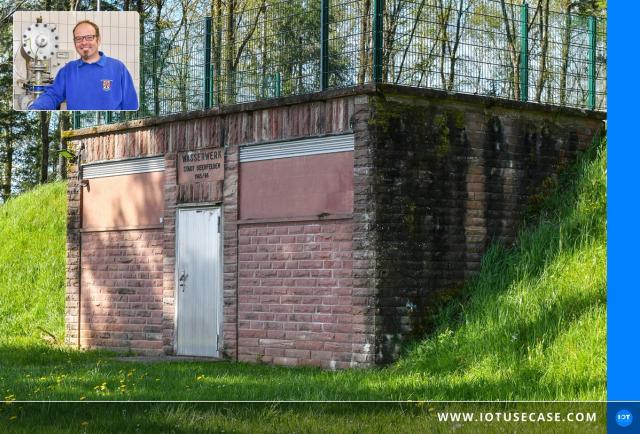
At a service reservoir or any other water reservoir, IoT records level, flow and pressure remotely. Water masters and power plant operators see the status of their storage centrally instead of reading values on site.
Water reservoir at a glance
Most frequent in the projects on this page
Industries
Technologies
Verified projects featuring Water reservoir




Service reservoirs and water storage: levels from a distance
In Oberzent, the energy supplier Entega built a LoRaWAN network because most sites have no mobile reception. Endress+Hauser integrated the 19 stations into its Netilion IIoT ecosystem, which presents the data in dashboards and in the report formats required by the authorities. WAGO gateways and components process the signals from different measuring devices. At the Nesensohn small hydropower plant, digifai uses a RevPi Connect as an IIoT gateway that collects sensor data on level, temperature and pressure and sends it to the digifai control IoT platform. Industrial cameras add visual monitoring, and an alarm system reports deviations.
Both examples come from energy and environment. The Oberzent water supply in the Odenwald is responsible for seven springs, two deep wells and 18 elevated reservoirs. Four water masters used to drive to the sites and note values by hand. Today they see reservoir levels and flows on a monitor or tablet, and leaks and faults in the network are noticed sooner. At the Nesensohn plant in Austria, built in 1922, the upper reservoir lies one kilometre from the main power station. The operator now has access to all plant data from anywhere, detects trends early and plans maintenance preventively.
Service reservoirs: frequently asked questions
How does drinking water reservoir monitoring work centrally?
Measuring devices at the reservoirs send their values by radio to a platform that shows levels and flows for all sites together. In Oberzent, 19 stations transmit via LoRaWAN to Netilion from Endress+Hauser. The water masters see the entire process of water treatment and storage at a glance on a monitor or tablet. Alarms draw attention to anomalies.
Which devices does water utility monitoring use at reservoirs?
Typically these are level, flow and pressure devices whose signals are combined by a gateway. In Oberzent, water masters used to read the data from 35 flow, 17 level and seven pressure devices on site. Today a WAGO gateway processes digital and analogue values via protocols such as Modbus, HART or IO-Link. At the Nesensohn power plant, sensors record level, temperature and pressure.
How does reservoir monitoring work at a small hydropower plant?
An IIoT gateway collects level, temperature and pressure data and sends it to a cloud platform. At the Nesensohn plant, the upper reservoir is one kilometre from the main power station. digifai integrated level measurement, temperature recording and penstock monitoring into the digifai control platform via a RevPi Connect. Machine learning detects deviations early, and water consumption analyses complement the system.
How does reservoir level monitoring work without mobile coverage?
With a LoRaWAN network that bridges long distances with little energy. In Oberzent, most sites had no reception, so the energy supplier Entega built such a network. LoRaWAN offers bidirectional communication and end-to-end encryption, and its data rates are sufficient for measurement and status data. The network server adjusts the data rate for each device so that batteries last a long time.
More assets in “Containers, Silos and Tanks”

Transport container
Shipment monitoring with IoT reports where a transport container is and whether anyone opens it without authorisation. For valuable or sensitive goods, the system raises an alarm immediately instead of a theft only being noticed by the recipient.

Load carrier
An RTLS locates load carriers such as mesh boxes, pallets and bins across halls and plants in real time. Companies cut search times, replace accompanying paperwork and manual scanning, and trigger bookings and transports automatically.

Pallet
Pallet tracking with IoT shows where every pallet is, what is on it and how much stock remains. Sensors, RFID and wireless networks replace search trips, manual scanning and stocktaking counts with a forklift.

Process vessel
Process monitoring with IoT continuously records level, temperature, humidity and other parameters in a process vessel. Without inspection rounds, operators know when to refill or empty it and whether the contents are still usable.

Collection container
Waste container monitoring connects collection containers and waste locks so that they report fill levels and emptying events in real time. Operators see which containers are full, plan collections accordingly and bill by actual use.
Container
Container tracking software with IoT shows where a container is and its status, whether an air freight container, a container in a construction fleet or a unit shipped worldwide. Companies save search time and plan storage more precisely.
IIoT Use Case user group
What no project tells you
What did the project cost? Which sensor didn't survive in the field? How did you get maintenance on board? 300+ industrial users discuss questions like these with each other every month, openly and without vendors in the room.
Frequent topics in these projects, bring your questions:
- Condition Monitoring
- Asset Management
- Corrective maintenance
Online every month
Alternating tech and business focus
Users only
No sales pitches, exchange under NDA
300+ members
OT, IT and IIoT leads from industry