Process vessel
Process monitoring with IoT continuously records level, temperature, humidity and other parameters in a process vessel. Without inspection rounds, operators know when to refill or empty it and whether the contents are still usable.
Process vessel at a glance
Most frequent in the projects on this page
Use cases
Technologies
Users in these projects


Verified projects featuring Process vessel



Monitor coolant and automate level checks



Digitally leverage optimisation potential in building services engineering
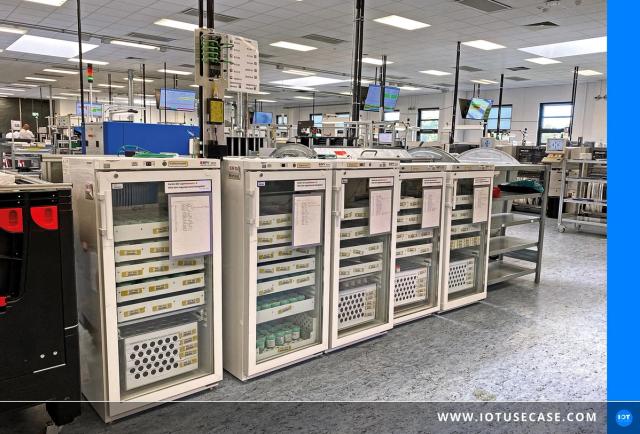


Printed circuit board production: condition monitoring of solder paste
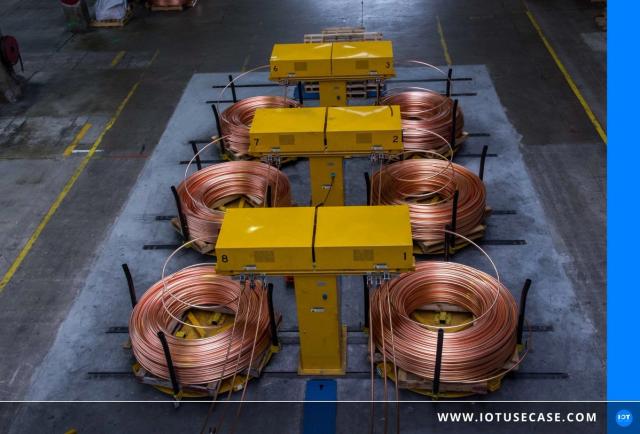



Monitoring of critical plant parameters in copper production
Process monitoring for process vessels: contents, temperature, state
In the solution examples, an ifm LR7020 level sensor with a probe rod measures the coolant in the 50-litre tank of a hacksaw. The io-key sends the value via the cellular network to the moneo cloud platform without any local IT infrastructure. With KIS.ME, RAFI connects level sensors on condensate collection containers via WLAN and automatically sends an email when a container needs emptying. TURCK monitors solder paste containers with temperature sensors in the refrigerator and additionally measures humidity during printing. A control cabinet guard transmits the data to the cloud via IO-Link and a switch. At Aurubis, the azeti IoT platform combines the critical values from 1,500 process parameters via protocols such as OPC UA, Profinet and Modbus in dashboards and machine learning models.
The examples come from metalworking, electronics, copper production and building services, as condition monitoring, remote reading and consumption recording. With the ifm io-key, inspection rounds at the hacksaw are no longer necessary, and warnings arrive by email or Teams. In its SMT production in Beierfeld, TURCK safeguards the storage conditions of its solder paste to avoid scrap caused by overaged paste. Multi-metal supplier Aurubis uses azeti to see the status of all machines on one dashboard and can respond faster to unplanned downtime.
Podcast episodes featuring Process vessel
Process monitoring for process vessels: frequently asked questions
How does remote condition monitoring of a vessel work without IT infrastructure?
Remote condition monitoring without IT infrastructure uses a gateway with its own cellular connection that sends the sensor value directly to the cloud. The ifm io-key only needs two cables, one for power and one for the sensor connector. The values go to moneo, where warning and alarm limits are defined. When the level in the tank drops, a message is sent to maintenance by email or Teams with a defined lead time.
Which level sensor suits small process vessels?
A level sensor with a probe rod cut to the depth of the vessel suits small containers. In the ifm solution, the LR7020 measures the level in a hacksaw tank with a 240-millimetre probe rod. The rod is shortened to 19 centimetres so that the end is detected correctly in the 20-centimetre-deep container and the bottom is not included in the measurement. The sensor is configured with moneo configure.
Why monitor machining coolant in the tank?
If coolant runs short and sawing continues anyway, the saw blade wears heavily. The tank of a hacksaw holds only about 50 litres, and the level fluctuates due to drag-out on the material and evaporation from the open container. To keep the emulsion from becoming too concentrated, it must be topped up regularly. With the ifm io-key, the level is monitored continuously, and maintenance can plan refilling as needed.
How can solder paste storage be monitored?
Solder paste storage is monitored with temperature sensors in the refrigerator, and humidity is added during the printing process. In its SMT production, TURCK uses the same sensors as in control cabinets, with data sent to the cloud via IO-Link. Printing must take place at 23 to 27 °C, and no more than eight hours should pass between printing and soldering. In future, RFID tracking is to prove that each container was stored correctly.
More assets in “Containers, Silos and Tanks”

Transport container
Shipment monitoring with IoT reports where a transport container is and whether anyone opens it without authorisation. For valuable or sensitive goods, the system raises an alarm immediately instead of a theft only being noticed by the recipient.

Load carrier
An RTLS locates load carriers such as mesh boxes, pallets and bins across halls and plants in real time. Companies cut search times, replace accompanying paperwork and manual scanning, and trigger bookings and transports automatically.

Pallet
Pallet tracking with IoT shows where every pallet is, what is on it and how much stock remains. Sensors, RFID and wireless networks replace search trips, manual scanning and stocktaking counts with a forklift.

Collection container
Waste container monitoring connects collection containers and waste locks so that they report fill levels and emptying events in real time. Operators see which containers are full, plan collections accordingly and bill by actual use.
Container
Container tracking software with IoT shows where a container is and its status, whether an air freight container, a container in a construction fleet or a unit shipped worldwide. Companies save search time and plan storage more precisely.

Fuel tank
An IoT fuel tank monitoring system reports the level of a plant's diesel tank, emergency fuel reserves or a construction dryer's fuel tank continuously and remotely. Operators plan refills on real values and detect theft or leaks early.
IIoT Use Case user group
What no project tells you
What did the project cost? Which sensor didn't survive in the field? How did you get maintenance on board? 300+ industrial users discuss questions like these with each other every month, openly and without vendors in the room.
Frequent topics in these projects, bring your questions:
- Condition Monitoring
- Corrective maintenance
- Digital Documentation
Online every month
Alternating tech and business focus
Users only
No sales pitches, exchange under NDA
300+ members
OT, IT and IIoT leads from industry