Fuel tank
An IoT fuel tank monitoring system reports the level of a plant's diesel tank, emergency fuel reserves or a construction dryer's fuel tank continuously and remotely. Operators plan refills on real values and detect theft or leaks early.
Fuel tank at a glance
Most frequent in the projects on this page
Use cases
Industries
Users in these projects


Verified projects featuring Fuel tank
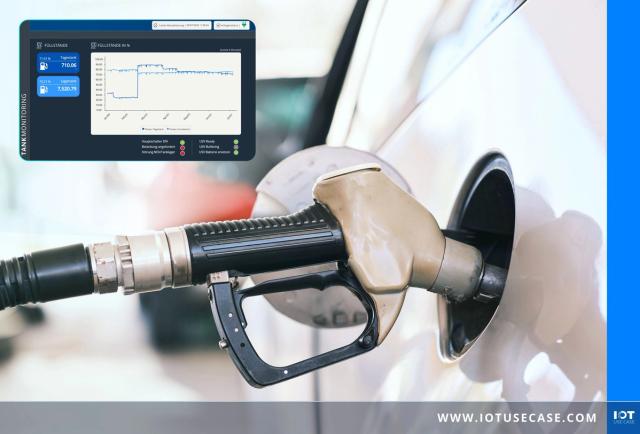






Monitoring tank fill levels via MQTT to safeguard operational readiness
The German state of Hesse records fuel tank levels at 48 critical infrastructure sites via ultrasonic sensors and MQTT on the VISUALYS platform. Manual inspection trips are no longer needed, saving one to three hours per site each week.
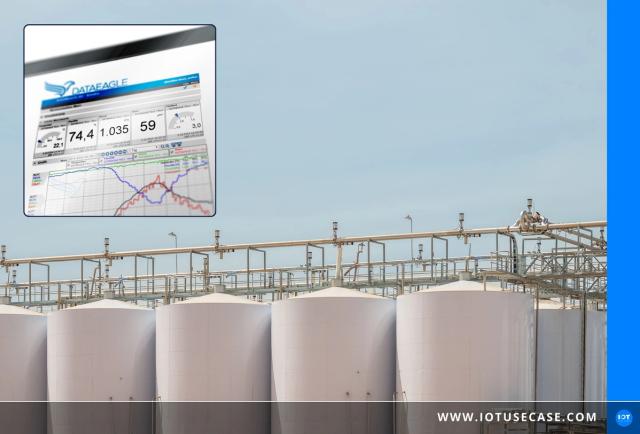




Cloud-based supply chain monitoring in Nigeria
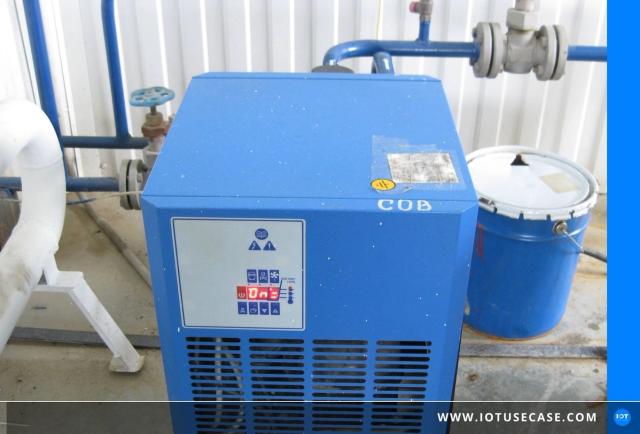





Building drying: condition monitoring for heat engineering and plant service
Fuel tank monitoring system: level and use of every diesel tank
For the State of Hesse, an ultrasonic sensor with a 4…20 mA output measures the fill height on each tank. A router transmits the value via MQTT to the VISUALYS platform whenever it changes, and at least once a day. The routers connect via the local network or LTE, and their firmware is maintained remotely via OpenVPN. In Nigeria, level and flow data travel via Modbus/RTU to a Schildknecht DATAEAGLE 7000 cellular gateway with eSIM and on to the DATAEAGLE Portal. Thermotec connects retrofitted sensors via IO-Link to the ifm io-key, which sends data to the ifm Cloud via NB-IoT or 2G.
The State of Hesse now sees the levels at 48 sites centrally, an email warns before a tank drops below a threshold, and around one to three hours of inspection work per site and week are saved. After 100 litres of diesel were stolen, a large beverage manufacturer in Nigeria now detects anomalies such as theft or leaks automatically and calculates consumption. Thermotec gives construction companies insight into the fuel level of their dryers. Podcast episode #98 with Elena Eberhardt and Didier Kärst of Schildknecht explores the Nigeria project.
Podcast episodes featuring Fuel tank
Fuel tank monitoring system: frequently asked questions
How does a diesel tank monitoring system measure and transmit the level?
An ultrasonic sensor measures the fill height and outputs it as a 4…20 mA signal. For the State of Hesse, the sensor is connected to the analogue input of a router that polls the value continuously. If the level changes by a defined amount, the router sends it via MQTT to the VISUALYS platform. In addition, a value is sent at least once a day to check the connection.
How does IoT support fleet fuel theft prevention at company tanks?
IoT records level and flow at the tank continuously, so unusual drops stand out immediately. After 100 litres of diesel were stolen, a beverage manufacturer in Nigeria could not determine when it happened because this data was missing. Today, sensors send data to the cloud via a Schildknecht gateway, and the system identifies anomalies such as theft or leaks automatically. It also issues a warning when levels are low.
How does site fuel tank monitoring warn users when fuel runs low?
The platform sends a message automatically as soon as a limit is undercut. Thermotec uses the ifm io-key and the ifm Cloud for this, which notifies users by push message, text message or email. Construction companies also see the fuel level of their dryers there and reorder in time. For the State of Hesse, falling below a threshold triggers an email to the people responsible.
How does diesel fuel monitoring secure reserves for a power outage?
They measure the levels of all tanks automatically and receive a warning before a tank falls below a critical threshold. The State of Hesse records the fuel reserves at 48 critical infrastructure sites centrally in this way. An email notification ensures that no tank runs empty unnoticed and that a supply for several days is kept available. According to the provider, the VISUALYS architecture can be transferred to emergency generators.
More assets in “Containers, Silos and Tanks”

Transport container
Shipment monitoring with IoT reports where a transport container is and whether anyone opens it without authorisation. For valuable or sensitive goods, the system raises an alarm immediately instead of a theft only being noticed by the recipient.

Load carrier
An RTLS locates load carriers such as mesh boxes, pallets and bins across halls and plants in real time. Companies cut search times, replace accompanying paperwork and manual scanning, and trigger bookings and transports automatically.

Pallet
Pallet tracking with IoT shows where every pallet is, what is on it and how much stock remains. Sensors, RFID and wireless networks replace search trips, manual scanning and stocktaking counts with a forklift.

Process vessel
Process monitoring with IoT continuously records level, temperature, humidity and other parameters in a process vessel. Without inspection rounds, operators know when to refill or empty it and whether the contents are still usable.

Collection container
Waste container monitoring connects collection containers and waste locks so that they report fill levels and emptying events in real time. Operators see which containers are full, plan collections accordingly and bill by actual use.
Container
Container tracking software with IoT shows where a container is and its status, whether an air freight container, a container in a construction fleet or a unit shipped worldwide. Companies save search time and plan storage more precisely.
IIoT Use Case user group
What no project tells you
What did the project cost? Which sensor didn't survive in the field? How did you get maintenance on board? 300+ industrial users discuss questions like these with each other every month, openly and without vendors in the room.
Frequent topics in these projects, bring your questions:
- Condition Monitoring
- Asset Management
- Corrective maintenance
Online every month
Alternating tech and business focus
Users only
No sales pitches, exchange under NDA
300+ members
OT, IT and IIoT leads from industry