Steam
In an industrial steam system, wireless sensors measure the temperature at which steam reaches network nodes and check the steam traps. Operators cut excessive feed temperatures and detect steam losses before the next inspection round.
Steam at a glance
Most frequent in the projects on this page
Industries
Users in these projects

Verified projects featuring Steam


Steam network monitoring with LoRaWAN®: detect losses and optimize generation
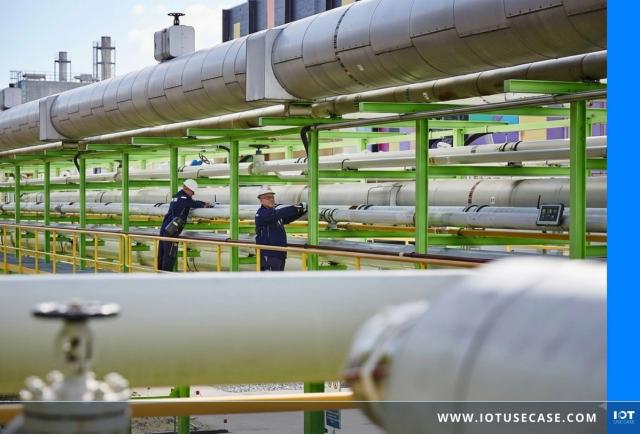
At a chemical site, Conneqtive monitors network temperatures and steam traps via LoRaWAN®. Leaks show up early and the power plant runs without unnecessary buffers.
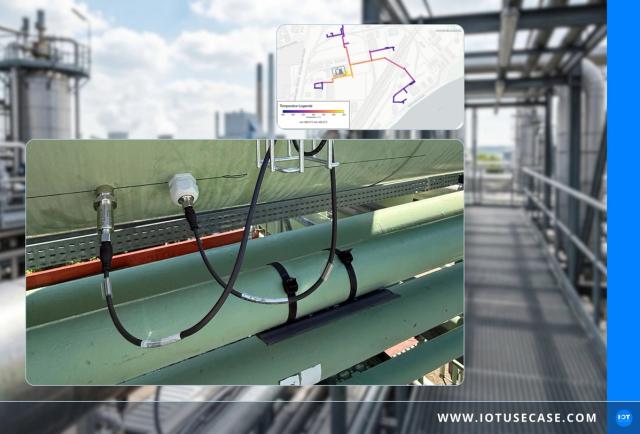

Digital twin for steam pipe monitoring: automated burner optimization
Industrial steam system: temperatures and steam traps via radio
In the solution examples, Currenta Conneqtive retrofits temperature sensors at critical network nodes and end points. Clamped onto the pipe and re-insulated, they run on batteries, withstand surface temperatures of up to 500 °C and are available in ATEX-certified versions. Each steam network is fitted with 10 to 15 high-temperature sensors. Steam traps are equipped with sensors that use ultrasonic and temperature measurement to detect whether they are blowing through or blocked. They are mounted on the trap's housing bolts without shutting down the plant. Data travels over Conneqtive's LoRaWAN network, without touching the control system, to a dashboard or via MQTT to customer systems. The system automatically converts losses into kg/h, euros and CO₂ equivalents.
Both examples come from chemicals and raw materials. At its three CHEMPARK sites, CURRENTA operates eight steam networks with three steam grades, whose temperatures used to be recorded only manually. Today, a digital twin shows temperature profiles live and provides the basis for automatically fine-tuning the burner settings in the power plant. Faulty steam traps are spotted immediately rather than at the annual inspection. Episode #216 covers the roughly 180 kilometres of steam network at CHEMPARK, and episode #185 the Kohrener Landmolkerei dairy, which also records its steam data with Schaeffler's autinityE3.
Podcast episodes featuring Steam
Industrial steam systems: frequently asked questions
How is process steam temperature measured across a steam network?
Process steam temperature in the network is measured by sensors clamped onto the outside of the pipe, which is then re-insulated. At CURRENTA, they sit at critical network nodes and end points, with 10 to 15 per network. The battery-powered sensors transmit via LoRaWAN, so no cabling is needed. For the first time, the temperature profile from the power plant to the consumers can be tracked continuously and automatically.
How can an industrial steam network be monitored wirelessly?
An industrial steam network can be monitored wirelessly via a LoRaWAN radio network that covers extensive sites with just a few antennas. Currenta Conneqtive has built such a network, which covers the entire CHEMPARK with a few outdoor antennas. Battery-powered sensors record temperatures at network nodes and the condition of the steam traps. The system runs without any intervention in the existing control system and without connecting to the customer's network.
How are steam leaks at faulty steam traps detected?
A faulty steam trap can be detected with ultrasonic and temperature measurement. Conneqtive's sensors distinguish whether a trap is blowing through and losing steam or blocked and backing up condensate. If an anomaly occurs, a notification appears in the dashboard immediately. In the past, these components were checked manually at fixed intervals, so defects went unnoticed for months. Condensate backlog can also cause dangerous water hammer in the pipeline.
How is steam included in energy monitoring?
In energy monitoring, steam is recorded as an energy source in its own right, alongside electricity, water and compressed air. In podcast episode #185, the Kohrener Landmolkerei dairy explains how it brings this energy data together and visualises it with the autinityE3 software from Schaeffler Digital Solutions. The starting point was a lack of transparency and nothing but invoice figures. At CURRENTA, steam losses are automatically converted into kg/h and euros, making them available for energy controlling.
More assets in “Fluids & Gases”

Compressed air
Compressed air leak detection with IoT continuously measures flow, pressure and compressor load, revealing leaks and unused running times. This cuts the cost of one of the most expensive forms of energy in manufacturing.

Indoor air
Indoor air quality monitoring with IoT means sensors continuously record CO₂, fine dust, particles, temperature and humidity and report limit violations immediately. Operators protect employees, safeguard product quality and heat and ventilate according to demand.

Drinking water
Water network leak detection for drinking water continuously measures pressure, flow and consumption with IoT and reports deviations immediately. Utilities find leaks, pipe bursts and water theft sooner and lose less drinking water.

Groundwater
Groundwater monitoring with IoT measures levels automatically and transmits them by radio to a platform. Authorities, utilities, construction sites and businesses with their own well replace manual measurements and are alerted to critical water levels or pump faults.

Wastewater
Wastewater flow measurement, levels and water quality can be recorded with IoT directly at pipes, basins and discharge points. Operators see wastewater volumes in real time, respond faster to faults and meet reporting obligations without daily sampling.

Molten metal
In foundry melting and vacuum metallurgy, IoT continuously records the melt pool, fill level, temperature and pressure of molten metal. Deviations show up before a batch becomes unusable or a furnace runs empty.
IIoT Use Case user group
What no project tells you
What did the project cost? Which sensor didn't survive in the field? How did you get maintenance on board? 300+ industrial users discuss questions like these with each other every month, openly and without vendors in the room.
Frequent topics in these projects, bring your questions:
- Condition Monitoring
- Digital Documentation
- Corrective maintenance
Online every month
Alternating tech and business focus
Users only
No sales pitches, exchange under NDA
300+ members
OT, IT and IIoT leads from industry