Sewage lifting station
Lift station monitoring makes the condition of remote sewage lifting stations visible in dashboards. When a fault occurs, the responsible technician is notified immediately, rather than the failure only being noticed on site.
Sewage lifting station at a glance
Most frequent in the projects on this page
Industries
Technologies
Users in these projects

Verified projects featuring Sewage lifting station
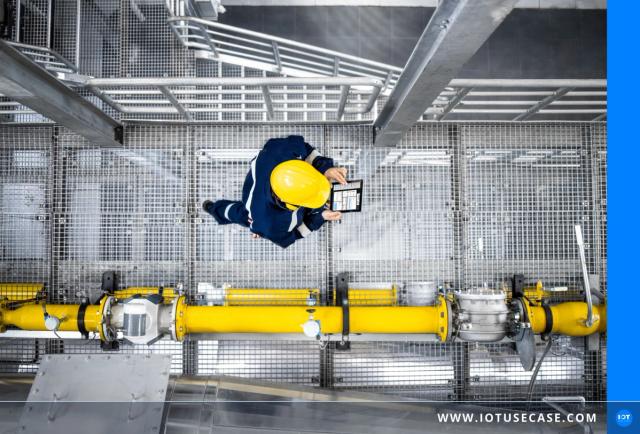






Lift station monitoring: faults go straight to the technician
In the solution example, pump manufacturer Wilo builds its IoT platform on ThingsBoard, with data connections running via Apache Kafka. ThingsBoard visualises the status of pumps and systems in dashboards, so devices and installations can be monitored remotely. Alarm functions have also been set up: if, for example, a fault occurs in a sewage lifting station, the responsible technician receives a message straight away and can drive to the site with a clear purpose. The platform is fully customisable and can be extended for future requirements.
The example comes from mechanical and plant engineering; the use case is remote reading within condition monitoring. Wilo offers the monitoring to its customers as a digital service so that their installations run more reliably. After a three-month proof of concept, the choice fell on ThingsBoard because it provides many functions while still allowing flexible customisation. Implementation partner it-novum supported the architecture and data connections. Project lead Roland Vonnahme, Research Engineer at Wilo, stresses that customers can now monitor their installations more easily and more effectively.
Lift station monitoring: frequently asked questions
How does a municipal lift station alarm reach the technician?
The alarm travels via an alarm function of the IoT platform directly to the responsible technician. At Wilo, alarms are set up in ThingsBoard for this purpose: if a sewage lifting station reports a fault, the responsible technician is notified immediately. They can then drive to the site and inspect it. The installations' data reaches the platform via Apache Kafka.
How does remote monitoring change maintenance of a municipal lift station?
With remote monitoring, lift station maintenance becomes more targeted because the condition is visible in the dashboard at all times. Wilo visualises the status of pumps and remote installations in ThingsBoard, so they can be monitored remotely and serviced more easily. Technicians then drive to the station that actually reports a fault, rather than visiting every site routinely.
Which platform suits sewage pumping station monitoring?
A suitable platform offers many functions out of the box while still allowing flexible customisation. After a three-month proof of concept, Wilo chose ThingsBoard, complemented by Apache Kafka for the data connections. According to project lead Roland Vonnahme, the decisive factor was that all current and future requirements could be covered. it-novum supported the implementation.
Can pump manufacturers offer lift station telemetry as a service?
Yes, pump manufacturers can offer this kind of remote monitoring as a digital service to their customers. Wilo introduced its own IoT platform for this, enabling customers to monitor their pumps and installations in real time and remotely. This is intended to contribute to more reliable operation. Because the ThingsBoard-based solution is fully customisable, it gives Wilo flexibility and planning certainty in the long term.
More assets in “Machinery and Equipment”
Pump
Pump monitoring with IoT records vibration, temperature, pressure and energy consumption of running pumps. Operators detect damage and faults before a pump fails and plan maintenance by condition rather than at fixed intervals.

Compressor
With IoT, compressor maintenance follows actual condition: sensors record current consumption, pressure, temperature and running times. Operators detect creeping damage and unused running time early and cut energy and service costs.

Electric motor
Motor condition monitoring with IoT continuously measures the vibration, temperature and current draw of electric motors. Operators detect imbalance, bearing damage or winding faults early and replace motors based on condition rather than after a failure.

Packaging machine
OEE software automatically records run times, downtime, speed and rejects on packaging machines from the machine signals. Operators see where their lines lose performance, and machine builders use the same data for remote access and digital services.

Refrigeration system
A refrigeration monitoring system makes service plannable: temperatures, refrigerant circuit pressures, compressor status and energy consumption flow into a platform in real time. Operators and service partners detect faults early, avoid unnecessary site visits and reduce excess consumption.

Air conditioning system
Commercial air conditioning systems in offices, retail branches and data centres can be monitored remotely with IoT. Operators see energy consumption, temperatures and faults in one place, detect failing compressors or refrigerant shortages early and plan service visits precisely.
IIoT Use Case user group
What no project tells you
What did the project cost? Which sensor didn't survive in the field? How did you get maintenance on board? 300+ industrial users discuss questions like these with each other every month, openly and without vendors in the room.
Frequent topics in these projects, bring your questions:
- Condition Monitoring
- Corrective maintenance
Online every month
Alternating tech and business focus
Users only
No sales pitches, exchange under NDA
300+ members
OT, IT and IIoT leads from industry