Service water
For legionella compliance, IoT monitoring ensures that service water in commercial operations stays hot enough at all times to kill legionella. In production, sensors also record how much water machines and processes consume.
Service water at a glance
Most frequent in the projects on this page
Users in these projects


Verified projects featuring Service water


Legionella compliance: keep service water hot, measure water use
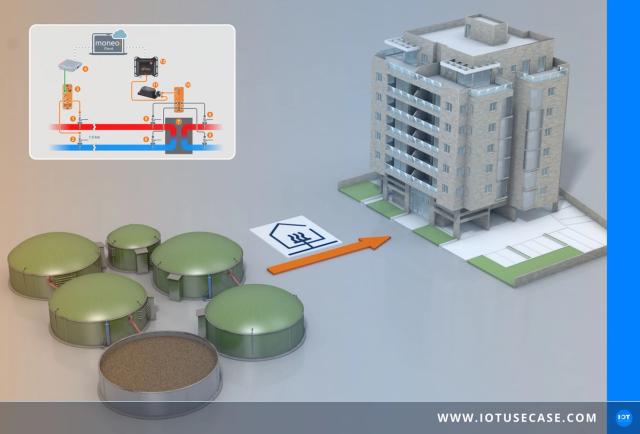
In the ifm solution examples, TT1250 temperature rod sensors sit in the shut-off valves of the pipe. At the feed point, TP2005 temperature plugs convert the signals and an AL1350 IO-Link master passes them on to the moneo edgeGateway AE2100. At the other end, an AL2384 IO-Link temperature module takes up to four sensors, and the io-key wireless IoT gateway sends the values via cellular network to the moneo cloud. Dashboards, analyses and limit values are set up there, with a transmission cycle of 60 seconds. In manufacturing, flow sensors record water consumption to the second. Via MQTT or OPC UA, the data reaches AWS, Azure or SAP, where an alarm can create a maintenance order in SAP PM.
The examples come from energy and environment, agriculture, and metal and electronics. Hermann Müller, operator of the Kögelhof biogas plant, supplies heat to the school in Mochenwangen via a 1.5-kilometre pipe. The service water is heated to at least 60 degrees Celsius. If the incoming temperature, the difference between flow and return, or the return temperature of the service water drops too far, he is alerted automatically. In production, ifm uses moneo to replace manual water meter readings and to reveal consumption outside operating hours.
Legionella compliance: frequently asked questions
How do operators of commercial buildings monitor legionella via water temperature?
Legionella monitoring continuously checks whether the service water maintains the required temperature. In the Kögelhof biogas plant example, the service water is heated to at least 60 degrees Celsius to prevent legionella from multiplying. Sensors measure the flow and return temperatures at the feed point and in the school building. If a value drops, the operator is alerted automatically.
How can operators automate legionella temperature monitoring?
Temperature sensors at several measuring points continuously report their values to an IoT platform, which raises an alarm automatically if temperatures fall too low. In Mochenwangen, the ifm io-key sends the values from the school via cellular network to the moneo cloud, even without existing network infrastructure. Limit values for flow, return and their difference are stored there. A control display also shows the values on site.
Why does the operator of a biogas district heating network monitor the return temperature?
The return temperature shows whether enough heat still arrives at the end of the pipe and whether the service water stays hygienic. In Mochenwangen, sensors in the school record the inlet and outlet temperatures at the plate heat exchanger. If the incoming heat, the difference between flow and return, or the return temperature of the service water falls too far, operator Hermann Müller is alerted automatically. This prevents temperature fluctuations in the classrooms.
What are the benefits of monitoring industrial service water?
Monitoring service water safeguards hygiene and supply and shows where water is being used. In the district heating network in Mochenwangen, the water in the school building stays safe and hygienic because temperature drops are reported immediately. In manufacturing, ifm makes consumption of water, electricity and compressed air visible at a glance. Recording the data automatically saves walking time and reveals where individual machines need attention.
More assets in “Fluids & Gases”

Compressed air
Compressed air leak detection with IoT continuously measures flow, pressure and compressor load, revealing leaks and unused running times. This cuts the cost of one of the most expensive forms of energy in manufacturing.

Indoor air
Indoor air quality monitoring with IoT means sensors continuously record CO₂, fine dust, particles, temperature and humidity and report limit violations immediately. Operators protect employees, safeguard product quality and heat and ventilate according to demand.

Drinking water
Water network leak detection for drinking water continuously measures pressure, flow and consumption with IoT and reports deviations immediately. Utilities find leaks, pipe bursts and water theft sooner and lose less drinking water.

Groundwater
Groundwater monitoring with IoT measures levels automatically and transmits them by radio to a platform. Authorities, utilities, construction sites and businesses with their own well replace manual measurements and are alerted to critical water levels or pump faults.

Wastewater
Wastewater flow measurement, levels and water quality can be recorded with IoT directly at pipes, basins and discharge points. Operators see wastewater volumes in real time, respond faster to faults and meet reporting obligations without daily sampling.

Molten metal
In foundry melting and vacuum metallurgy, IoT continuously records the melt pool, fill level, temperature and pressure of molten metal. Deviations show up before a batch becomes unusable or a furnace runs empty.
IIoT Use Case user group
What no project tells you
What did the project cost? Which sensor didn't survive in the field? How did you get maintenance on board? 300+ industrial users discuss questions like these with each other every month, openly and without vendors in the room.
Frequent topics in these projects, bring your questions:
- Condition Monitoring
- Energy Monitoring
- Quality Management
Online every month
Alternating tech and business focus
Users only
No sales pitches, exchange under NDA
300+ members
OT, IT and IIoT leads from industry