Roller
Roller speed monitoring records the speed of every roller on a production line and reveals slip and root causes the operator terminal does not show. Operators cut scrap and downtime caused by contaminated machines.
Roller at a glance
Most frequent in the projects on this page
Verified projects featuring Roller
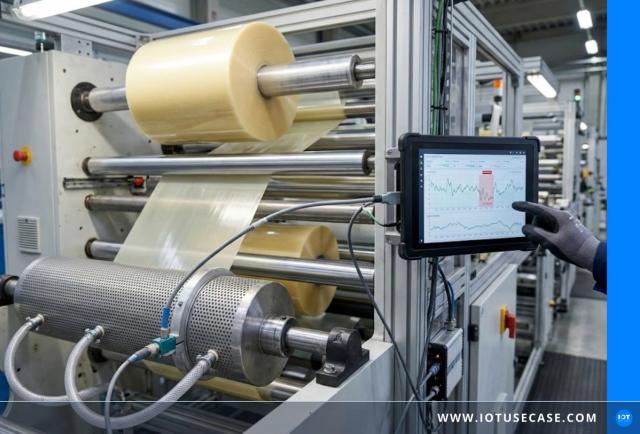






Roller speed monitoring: finding slip with process data
In the solution example, the controller of an adhesive tape production line built in 2005 was digitised with the ENLYZE Spark edge device. The PLC processes around 400 setpoints and actual values, including the speeds of individual rollers, web tension and line speed. The operator terminal shows only a few of them and allows neither deeper analysis nor export. In the web-based ENLYZE app, by contrast, all values are available for targeted analysis, and visualisation is also possible with Grafana and Microsoft Power BI. Historical batches can therefore be examined after the event.
The example comes from consumer goods manufacturing and covers scrap reduction and correlation of production parameters. An adhesive tape manufacturer from North Rhine-Westphalia struggled with partial rewinding of thin transfer films, around 11,000 metres of scrap per year. Using the ENLYZE platform, the head of development found a discrepancy of about 20% between the laminating station and the tension station. The cause was too little friction at the master roller: the controller increased its speed, creating slip that damaged the liner's silicone layer. Since a vacuum was added to the master roller, the fault has not recurred. Material savings alone amount to around 11,000 euros a year, and scrap for one product group fell by 30%.
Industrial rollers: frequently asked questions
What causes slippage between a roller and the web?
Slippage occurs when a roller's speed differs significantly from the web speed. A slight overspeed in the low single-digit percentage range is inherent to the process and harmless. In the solution example, the deviation was about 20% because friction at the master roller was too low and the controller increased its speed to maintain web tension. The slip damaged the silicone layer of the liner.
Why does roller speed measurement focus on the master roller?
The master roller is normally the point of highest friction between line and web, and its speed defines the production speed. On the tape line in the example, the machine controlled web tension there while also controlling line speed at the rewinder. With too little friction, this dual control led to an excessive speed difference. A vacuum added to the roller has since increased the contact pressure.
Which roller drive data helps with troubleshooting?
The most useful data are setpoint and actual speeds of all roller drives over a longer period. In the example, the PLC processes around 400 such values, while the terminal displays only a few. Only the comparison in the ENLYZE app revealed that the tension station ran at 13.6 m/min while the laminating station and setpoint were at 11 m/min. Manual measurements at the rollers then confirmed the cause.
Can an older laminating line be digitised retrospectively?
Yes, older lines can also be connected through their existing controller. In the solution example, the PLC of an adhesive tape line from 2005 was digitised with the ENLYZE Spark edge device without replacing the machine. Since then, all setpoints and actual values have been processed and made available in the ENLYZE app. This made it possible to resolve a fault the manufacturer had previously been unable to solve through its own investigations.
More assets in “Machinery and Equipment”

Pump
Pump monitoring with IoT records vibration, temperature, pressure and energy consumption of running pumps. Operators detect damage and faults before a pump fails and plan maintenance by condition rather than at fixed intervals.

Compressor
With IoT, compressor maintenance follows actual condition: sensors record current consumption, pressure, temperature and running times. Operators detect creeping damage and unused running time early and cut energy and service costs.

Electric motor
Motor condition monitoring with IoT continuously measures the vibration, temperature and current draw of electric motors. Operators detect imbalance, bearing damage or winding faults early and replace motors based on condition rather than after a failure.

Packaging machine
OEE software automatically records run times, downtime, speed and rejects on packaging machines from the machine signals. Operators see where their lines lose performance, and machine builders use the same data for remote access and digital services.

Refrigeration system
A refrigeration monitoring system makes service plannable: temperatures, refrigerant circuit pressures, compressor status and energy consumption flow into a platform in real time. Operators and service partners detect faults early, avoid unnecessary site visits and reduce excess consumption.

Air conditioning system
Commercial air conditioning systems in offices, retail branches and data centres can be monitored remotely with IoT. Operators see energy consumption, temperatures and faults in one place, detect failing compressors or refrigerant shortages early and plan service visits precisely.
IIoT Use Case user group
What no project tells you
What did the project cost? Which sensor didn't survive in the field? How did you get maintenance on board? 300+ industrial users discuss questions like these with each other every month, openly and without vendors in the room.
Frequent topics in these projects, bring your questions:
- Quality Management
Online every month
Alternating tech and business focus
Users only
No sales pitches, exchange under NDA
300+ members
OT, IT and IIoT leads from industry