Mill
In a connected industrial flour mill, sensors and controllers deliver their data to a control system and a cloud platform. Mill operators control processes automatically, reduce maintenance effort, energy use and wear, and detect faults in the mill circuit early.
Mill at a glance
Most frequent in the projects on this page
Industries
Technologies
Users in these projects

Verified projects featuring Mill
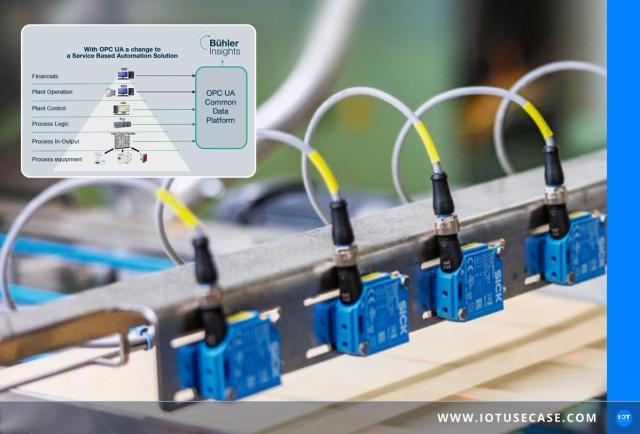




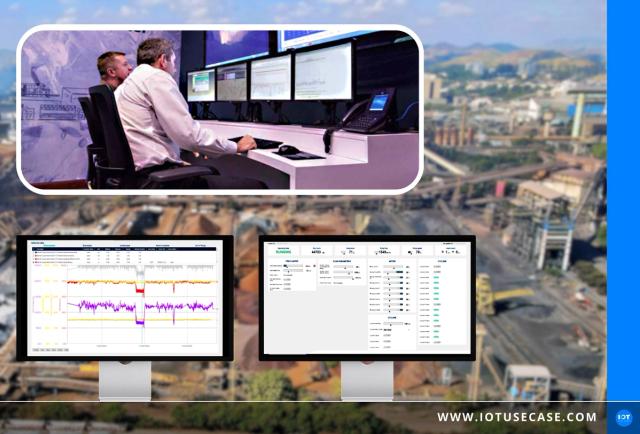


Industrial flour mill: automated control and data analysis
Since 2014, Bühler has described its plants end to end with OPC UA. Every function in the controller is an OPC UA tag, so a mill with 60 machines automatically generates 10,000 OPC UA nodes. The Pluto automation software controls plants with up to 150 machines, while larger plants and those using recipes run on Mercury MES. An IoT gateway brings the data into the Bühler Insights platform. At customer sites, FLSmidth monitors power consumption and false air in the mill circuit, among other things, visualised with ICONICS software on Microsoft Azure.
The examples come from food production, mining and the cement industry. At Bühler, 90 per cent of all new installations and modernisations are connected via OPC UA, and Pluto’s main applications are wheat mills, rice mills and silo handling. The Mill E3 in the United Kingdom is a fully digitalised mill built from prefabricated modules: more than 15,000 data points describe the process, and the entire mill needs just one operator. FLSmidth supports its customers with troubleshooting from control centres around the world and sends them regular reports on the condition of their plants.
Industrial flour mills: frequently asked questions
How does digitalisation change the way a milling plant is built?
Digitalisation replaces individual programming with prefabricated, standardised building blocks. Bühler uses Pluto to generate controller software automatically from pre-programmed objects, which reduces installation effort. The Mill E3 is built from prefabricated modules, needs only three levels instead of the usual five or six, and keeps all equipment accessible for maintenance and process control.
How is production controlled across the flour milling equipment of a digitalised mill?
In a digitalised mill, a production control system manages the flour milling process from delivery to dispatch. In Bühler’s Mill E3, Mercury MES records operating data, stores recipes and handles production planning, right up to sealing the trucks loaded with flour. Bühler controls smaller plants with up to 150 machines with the Pluto plant control system, and larger plants and those using recipes with Mercury MES.
How many operators does a digitalised flour mill plant need?
In Bühler’s fully digitalised Mill E3, where wheat is processed into flour, the entire mill needs only a single operator. This is made possible by more than 15,000 data points covering every production step, connectivity via Bühler Insights and control with Mercury MES. The grain is ground in several stages in the roller mill.
Which commercial flour mill and rice mill plants use this automation?
Wheat mills, rice mills and silo handling are the main applications of Bühler’s Pluto automation software, which generates solutions automatically and in real time based on the data collected. Bühler supplies mill operators with complete plants for cleaning, hulling, polishing, grinding and sorting. At the Application & Training Center in Bengaluru, mill owners, mill managers and operators learn new operating techniques for running, maintaining and organising a mill.
More assets in “Machinery and Equipment”

Pump
Pump monitoring with IoT records vibration, temperature, pressure and energy consumption of running pumps. Operators detect damage and faults before a pump fails and plan maintenance by condition rather than at fixed intervals.

Compressor
With IoT, compressor maintenance follows actual condition: sensors record current consumption, pressure, temperature and running times. Operators detect creeping damage and unused running time early and cut energy and service costs.

Electric motor
Motor condition monitoring with IoT continuously measures the vibration, temperature and current draw of electric motors. Operators detect imbalance, bearing damage or winding faults early and replace motors based on condition rather than after a failure.

Packaging machine
OEE software automatically records run times, downtime, speed and rejects on packaging machines from the machine signals. Operators see where their lines lose performance, and machine builders use the same data for remote access and digital services.

Refrigeration system
A refrigeration monitoring system makes service plannable: temperatures, refrigerant circuit pressures, compressor status and energy consumption flow into a platform in real time. Operators and service partners detect faults early, avoid unnecessary site visits and reduce excess consumption.

Air conditioning system
Commercial air conditioning systems in offices, retail branches and data centres can be monitored remotely with IoT. Operators see energy consumption, temperatures and faults in one place, detect failing compressors or refrigerant shortages early and plan service visits precisely.
IIoT Use Case user group
What no project tells you
What did the project cost? Which sensor didn't survive in the field? How did you get maintenance on board? 300+ industrial users discuss questions like these with each other every month, openly and without vendors in the room.
Frequent topics in these projects, bring your questions:
- Condition Monitoring
- Corrective maintenance
- Digital Documentation
Online every month
Alternating tech and business focus
Users only
No sales pitches, exchange under NDA
300+ members
OT, IT and IIoT leads from industry