Hydropower plant
For hydro plant maintenance, IoT sensors in a hydropower plant monitor vibration on turbines and generators, water levels, pressure and temperature, as well as the dam. Operators of widely distributed hydropower plants detect faults early and reduce on-site inspections.
Hydropower plant at a glance
Most frequent in the projects on this page
Industries
Users in these projects


Verified projects featuring Hydropower plant
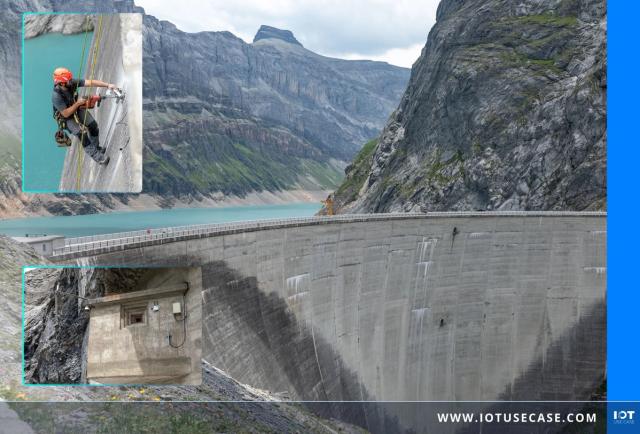




Monitoring critical infrastructure in the Alps wire-free via LoRaWAN
Axpo monitors the 146-metre Limmernsee dam in the Swiss Alps with battery-powered LoRaWAN sensors. Readings on solar radiation, wind and temperature flow via akenza straight into finite-element simulations of how the concrete ages.



Retrofit hydropower plant – from proprietary control to open IoT platform



Vibration analysis and real-time monitoring: condition monitoring in hydropower plants
Hydro plant maintenance: turbines, generators and dams in view
At CVA, ifm vibration sensors record the behaviour of rotating components on turbines and generators, while further sensors measure the pressure, temperature and flow of the coolant. The data is analysed centrally in the moneo IIoT platform, and moneo RTM raises an alarm when limit values are exceeded. At the Nesensohn small hydropower plant, a Revolution Pi RevPi Connect serves as the IIoT gateway: it collects level, temperature and pressure values and transfers them to digifai's “control” platform, complemented by industrial cameras and remote access. At the Limmernsee dam, battery-powered wireless sensors send global radiation, wind, air and surface temperature via LoRaWAN to the akenza platform, with a single gateway covering the whole site.
All three examples come from power generation, as temperature measurement and vibration monitoring in condition monitoring. Compagnia Valdostana delle Acque (CVA) operates 32 hydropower plants in the Aosta Valley, some with generators in caverns inside the mountains. It now uses on-site condition checks only when the online monitoring systems indicate a fault. Axpo monitors the Limmernsee dam; the sensor installation was up and running within one working day, and the readings feed simulations of concrete ageing. Built in 1922, the Nesensohn plant in Austria has had remote access to all plant data since its retrofit by digifai.
Hydro plant maintenance: frequently asked questions
How are hydro turbines and generators monitored?
Turbines and generators are monitored with vibration sensors, complemented by measurements of coolant pressure, temperature and flow. CVA has equipped its Valpelline plant with ifm vibration sensors, and moneo RTM raises an alarm when limit values are exceeded. The technicians analyse all vibration trends in real time and only carry out on-site checks when the online systems indicate a fault. In the long term, CVA wants to build genuine predictive maintenance on this basis.
How does a hydropower plant retrofit work?
A hydropower plant retrofit can start with an IIoT gateway that connects existing components to a cloud platform. At the Nesensohn small hydropower plant in Austria, built in 1922, digifai used a Revolution Pi RevPi Connect for this purpose. It integrates level measurement, temperature recording and penstock monitoring into central monitoring, even though the upper reservoir is one kilometre from the main power house. An alarm system reports deviations, and industrial cameras provide visual monitoring.
How does dam safety monitoring with wireless sensors work?
On a dam, battery-powered wireless sensors take measurements at regular intervals and send their values via LoRaWAN, with no cabling required. This is how Axpo records global radiation, wind speed and direction, and air and surface temperatures at the Limmernsee dam. A single gateway covers the whole site, and the batteries last for years. In the akenza platform, the data is decoded and normalised and then fed into finite element models of concrete ageing.
How quickly can a pumped storage hydropower plant be fitted with wireless sensors?
At the Limmern pumped storage plant, the complete sensor installation was up and running within a single working day, and connecting it to the cloud took only a few minutes. Axpo installed battery-powered sensors at selected points on the dam, with the data flowing directly into akenza. Since then, the installation has been delivering data continuously. Further Axpo projects for hydrological monitoring are running at various sites in the Alps, using different transmission technologies depending on local conditions.
More assets in “Machinery and Equipment”

Pump
Pump monitoring with IoT records vibration, temperature, pressure and energy consumption of running pumps. Operators detect damage and faults before a pump fails and plan maintenance by condition rather than at fixed intervals.

Compressor
With IoT, compressor maintenance follows actual condition: sensors record current consumption, pressure, temperature and running times. Operators detect creeping damage and unused running time early and cut energy and service costs.

Electric motor
Motor condition monitoring with IoT continuously measures the vibration, temperature and current draw of electric motors. Operators detect imbalance, bearing damage or winding faults early and replace motors based on condition rather than after a failure.

Packaging machine
OEE software automatically records run times, downtime, speed and rejects on packaging machines from the machine signals. Operators see where their lines lose performance, and machine builders use the same data for remote access and digital services.

Refrigeration system
A refrigeration monitoring system makes service plannable: temperatures, refrigerant circuit pressures, compressor status and energy consumption flow into a platform in real time. Operators and service partners detect faults early, avoid unnecessary site visits and reduce excess consumption.

Air conditioning system
Commercial air conditioning systems in offices, retail branches and data centres can be monitored remotely with IoT. Operators see energy consumption, temperatures and faults in one place, detect failing compressors or refrigerant shortages early and plan service visits precisely.
IIoT Use Case user group
What no project tells you
What did the project cost? Which sensor didn't survive in the field? How did you get maintenance on board? 300+ industrial users discuss questions like these with each other every month, openly and without vendors in the room.
Frequent topics in these projects, bring your questions:
- Condition Monitoring
- Corrective maintenance
Online every month
Alternating tech and business focus
Users only
No sales pitches, exchange under NDA
300+ members
OT, IT and IIoT leads from industry