Driving simulator
An automotive driving simulator moves structures weighing many tonnes with high dynamics, and all cables run through energy chains. Break monitoring reports chain damage early and switches the system off automatically if necessary.
Driving simulator at a glance
Most frequent in the projects on this page
Users in these projects

Verified projects featuring Driving simulator
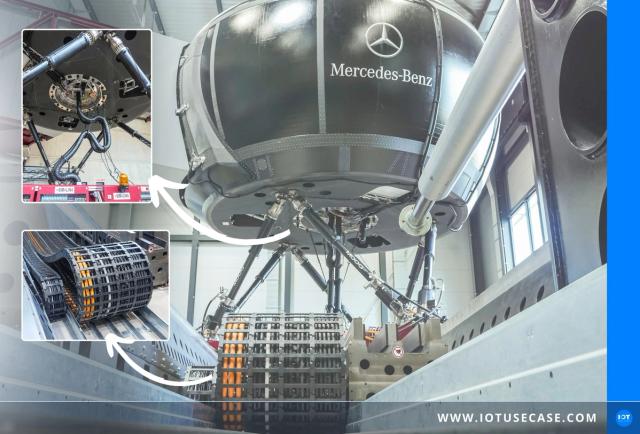



Automotive driving simulator: detecting chain breaks
In the solution example, four energy chains, each 14.80 metres long, carry all the lines for power, control, networking, pneumatics and cooling water, a total of 90 kilograms per metre over 20 metres of travel. The installation uses the P4.1 series e-chain with plain bearings made of high-performance polymers and new chainflex cables. For EC.B break detection, a rope is tensioned through the e-chain; it registers every change in length and reports it to the EC.B sensor. Chain breaks are thus detected early, and the system can shut down automatically.
The example comes from the automotive industry, with break detection and cable monitoring as use cases. At its Technology Center in Sindelfingen, Mercedes-Benz runs a 22-tonne driving simulator with a 360° screen and a twelve-metre rail. It is used for vehicle dynamics, operating concepts, driver assistance systems and autonomous driving. The system moves at up to ten metres per second. After ten years of trouble-free operation with one system, igus replaced all cables and chains and added break monitoring to further increase plant safety and availability.
Automotive driving simulator: frequently asked questions
How does break monitoring work on a driving simulator?
A rope tensioned through the energy chain registers every change in length and reports it to a sensor. With the igus EC.B break detection in the Mercedes-Benz driving simulator, chain breaks are detected early in this way. The system can then shut down automatically before cables or equipment are damaged. This increases safety during operation.
How are cables routed in an automotive driving simulator?
In energy chains that keep power, data and media moving with the system. In the Mercedes-Benz driving simulator in Sindelfingen, all lines for power, control, networking, pneumatics and cooling water run through four chains, each 14.80 metres long. That amounts to 90 kilograms per metre. The chains consist of several bands so that the weight is distributed evenly.
What does modernising a driving simulator involve?
At Mercedes-Benz, it meant replacing all cables and energy chains and adding new break monitoring. igus replaced the existing P4 series profile rollers with the P41.80 e-chain and the old cables with chainflex cables. The guide trough was still in very good condition, so only its damping profiles were renewed. igus handled design, supply and installation from a single source.
What loads act on an automotive driving simulator motion platform?
High dynamics and large masses. The Mercedes-Benz driving simulator moves 22 tonnes at up to ten metres per second, and the computer calculates vehicle behaviour more than 1,000 times per second. The energy chains carry 90 kilograms of cables per metre. igus therefore uses chains with maintenance-free plain bearings made of high-performance polymers, together with break monitoring.
More assets in “Machinery and Equipment”

Pump
Pump monitoring with IoT records vibration, temperature, pressure and energy consumption of running pumps. Operators detect damage and faults before a pump fails and plan maintenance by condition rather than at fixed intervals.

Compressor
With IoT, compressor maintenance follows actual condition: sensors record current consumption, pressure, temperature and running times. Operators detect creeping damage and unused running time early and cut energy and service costs.

Electric motor
Motor condition monitoring with IoT continuously measures the vibration, temperature and current draw of electric motors. Operators detect imbalance, bearing damage or winding faults early and replace motors based on condition rather than after a failure.

Packaging machine
OEE software automatically records run times, downtime, speed and rejects on packaging machines from the machine signals. Operators see where their lines lose performance, and machine builders use the same data for remote access and digital services.

Refrigeration system
A refrigeration monitoring system makes service plannable: temperatures, refrigerant circuit pressures, compressor status and energy consumption flow into a platform in real time. Operators and service partners detect faults early, avoid unnecessary site visits and reduce excess consumption.

Air conditioning system
Commercial air conditioning systems in offices, retail branches and data centres can be monitored remotely with IoT. Operators see energy consumption, temperatures and faults in one place, detect failing compressors or refrigerant shortages early and plan service visits precisely.
IIoT Use Case user group
What no project tells you
What did the project cost? Which sensor didn't survive in the field? How did you get maintenance on board? 300+ industrial users discuss questions like these with each other every month, openly and without vendors in the room.
Frequent topics in these projects, bring your questions:
- Condition Monitoring
- Corrective maintenance
- Predictive Maintenance
Online every month
Alternating tech and business focus
Users only
No sales pitches, exchange under NDA
300+ members
OT, IT and IIoT leads from industry