Coil winding machine
A textile winding machine winds and rewinds yarn onto as many as 1,000 bobbins. IoT gateways pick up sensor data directly on the machine and show output and downtime, even on equipment dating from the 1980s.
Coil winding machine at a glance
Most frequent in the projects on this page
Use cases
Industries
Verified projects featuring Coil winding machine
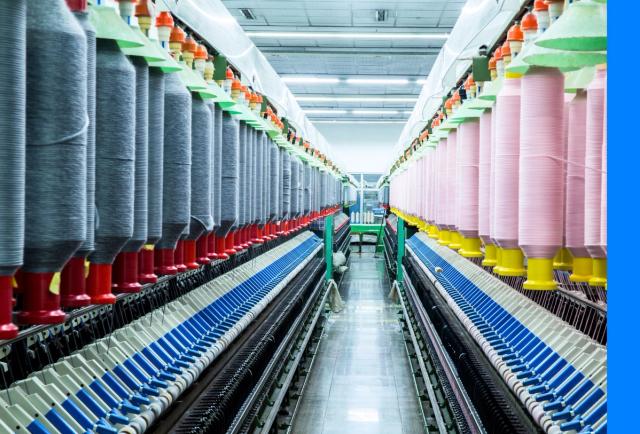



Textile winding machine: connecting old and new with IoT
In the solution example, in.hub IIoT gateways and modules read data from machines made by many manufacturers and connect sensors, actuators, controllers and bus systems directly. On the winding machine, they tap the signal from the rotating disc over which the thread runs, a small wheel with holes on the side of the machine. The integrated siineos operating system uses the disc's diameter and number of holes to calculate how many metres of thread pass through, and from this the output in kilograms for each machine. The data goes to the update texware monitoring tool, which interprets and visualises it.
The example comes from the consumer goods sector, with shift comparison and utilisation and throughput tracking as use cases. Yarn producers run machines from different manufacturers and generations whose vendor applications are not compatible with each other. Winding machines have 400 to 1,000 bobbins, and on older models it is not clear whether all of them are working. With in.hub, textile companies can see precisely when and how often downtime occurs. At shift change, a screen shows how the previous shift went, replacing Excel lists.
Textile winding machine: frequently asked questions
How is an old textile winding machine retrofitted with IoT?
With additional sensors and an IIoT gateway that works independently of the manufacturer. The in.hub devices tap the signal from the rotating disc over which the thread runs. In this way, even older textile machines, some dating back to the 1980s, can be connected to the update texware systems. Companies can integrate and configure the solution themselves.
How is the output of winding machines measured in yarn production?
By the length of thread passing through the machine. The in.hub siineos operating system calculates it from the diameter of the rotating disc and its number of holes, which vary by manufacturer. This gives the output in kilograms per machine. Because winding machines have 400 to 1,000 bobbins, this is what makes their different capacities comparable.
How is downtime detected on winding machines?
By recording machine data continuously instead of evaluating it manually. With the in.hub solution, textile companies can determine precisely when and how often downtime occurs. On older winding machines in particular, it used to be unclear whether all bobbins were really working or whether some were faulty. The data flows into the update texware monitoring tool, where it is visualised.
How are shifts compared on winding machines?
Via a central screen showing the same data values for all machines. At shift change, staff can see immediately how the previous shift went, and Excel lists and other documents are no longer needed. Results from recent days and older data can be called up at any time. The basis is the manufacturer-independent data collected by in.hub in the update texware monitoring tool.
More assets in “Machinery and Equipment”

Pump
Pump monitoring with IoT records vibration, temperature, pressure and energy consumption of running pumps. Operators detect damage and faults before a pump fails and plan maintenance by condition rather than at fixed intervals.

Compressor
With IoT, compressor maintenance follows actual condition: sensors record current consumption, pressure, temperature and running times. Operators detect creeping damage and unused running time early and cut energy and service costs.

Electric motor
Motor condition monitoring with IoT continuously measures the vibration, temperature and current draw of electric motors. Operators detect imbalance, bearing damage or winding faults early and replace motors based on condition rather than after a failure.

Packaging machine
OEE software automatically records run times, downtime, speed and rejects on packaging machines from the machine signals. Operators see where their lines lose performance, and machine builders use the same data for remote access and digital services.

Refrigeration system
A refrigeration monitoring system makes service plannable: temperatures, refrigerant circuit pressures, compressor status and energy consumption flow into a platform in real time. Operators and service partners detect faults early, avoid unnecessary site visits and reduce excess consumption.

Air conditioning system
Commercial air conditioning systems in offices, retail branches and data centres can be monitored remotely with IoT. Operators see energy consumption, temperatures and faults in one place, detect failing compressors or refrigerant shortages early and plan service visits precisely.
IIoT Use Case user group
What no project tells you
What did the project cost? Which sensor didn't survive in the field? How did you get maintenance on board? 300+ industrial users discuss questions like these with each other every month, openly and without vendors in the room.
Frequent topics in these projects, bring your questions:
- Asset Management
- Energy Monitoring
Online every month
Alternating tech and business focus
Users only
No sales pitches, exchange under NDA
300+ members
OT, IT and IIoT leads from industry