Cathodic dip coating bath
In electrocoating, the temperature of the cathodic dip coating bath must remain constant. IoT monitors filters, heat exchangers and the paint circuit so that clogged filters are detected before the bath gets out of control.
Cathodic dip coating bath at a glance
Most frequent in the projects on this page
Industries
Verified projects featuring Cathodic dip coating bath




Electrocoating: keep the bath stable, change filters in time
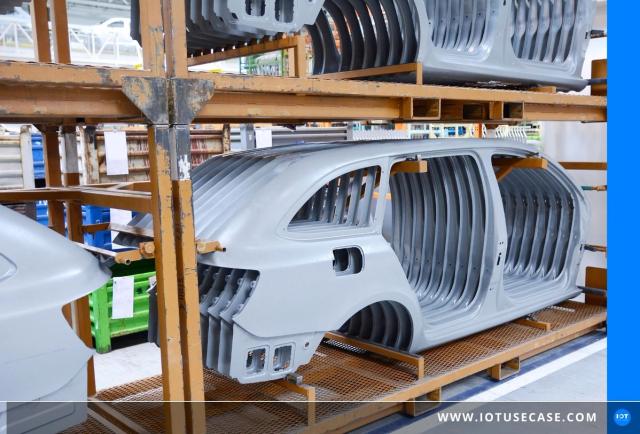
In the solution example, a pump continuously circulates the paint through a filter and a heat exchanger. If deposits clog them, the paint flow through the cooling section is no longer enough to hold the temperature. The condition of the filters often cannot be measured directly. That is why the Nexeed Industrial Application System from Bosch Connected Industry records not only filter pressure but also the temperature and pressure difference upstream and downstream of the heat exchanger, as well as the opening rate of the three-way valve on the heat exchanger. All parameters come together live and centrally, and individually defined rules notify the experts as soon as a value becomes critical.
The example comes from an automotive paint shop; the use case is filter monitoring within condition monitoring and predictive maintenance. An unplanned replacement of the entire bath means a long plant outage. With Bosch Connected Industry, maintenance staff and technicians receive a notification when anomalies occur, even remotely, and can react early. If clogging is on the horizon, the filter change can be planned, for example for the weekend. The aim is that unplanned outages caused by clogged filters no longer occur in the paint shop.
Electrocoating: frequently asked questions
Why must the temperature of a KTL coating bath stay constant?
The temperature of a KTL coating bath must stay constant because, according to the source, even a few degrees of difference cause enormous costs. A pump therefore constantly circulates the paint through filters and heat exchangers. If these clog, the paint flow through the cooling section is no longer sufficient. In the worst case, the whole bath has to be replaced unplanned, which means a long plant outage.
Which readings reveal clogged filters in e-coat filtration?
Clogged filters show up most clearly in a combination of readings, not in filter pressure alone. The Nexeed Industrial Application System from Bosch Connected Industry additionally records the temperature and pressure difference upstream and downstream of the heat exchanger and the opening rate of the three-way valve. If any of these parameters exceeds a critical value, the system notifies the responsible experts according to individually defined rules.
How can the filter change on an e-coat tank be planned?
The filter change can be planned when the line is monitored continuously and warnings arrive early. In the Bosch Connected Industry example, maintenance staff or technicians receive a notification when anomalies occur, even remotely. If clogging is on the horizon, they schedule the change for a non-production period such as the weekend, instead of having to react to an outage.
Does monitoring cathodic electrocoating require new sensors?
Not necessarily; what matters is bringing the existing parameters together centrally and evaluating them jointly. In the Bosch Connected Industry example, filter pressure, temperature and pressure differences at the heat exchanger and valve opening are displayed live in the Nexeed Industrial Application System. Because the condition of the filter often cannot be measured directly, only this combination gives maintenance a reliable picture.
More assets in “Fluids & Gases”

Compressed air
Compressed air leak detection with IoT continuously measures flow, pressure and compressor load, revealing leaks and unused running times. This cuts the cost of one of the most expensive forms of energy in manufacturing.

Indoor air
Indoor air quality monitoring with IoT means sensors continuously record CO₂, fine dust, particles, temperature and humidity and report limit violations immediately. Operators protect employees, safeguard product quality and heat and ventilate according to demand.

Drinking water
Water network leak detection for drinking water continuously measures pressure, flow and consumption with IoT and reports deviations immediately. Utilities find leaks, pipe bursts and water theft sooner and lose less drinking water.

Groundwater
Groundwater monitoring with IoT measures levels automatically and transmits them by radio to a platform. Authorities, utilities, construction sites and businesses with their own well replace manual measurements and are alerted to critical water levels or pump faults.

Wastewater
Wastewater flow measurement, levels and water quality can be recorded with IoT directly at pipes, basins and discharge points. Operators see wastewater volumes in real time, respond faster to faults and meet reporting obligations without daily sampling.

Molten metal
In foundry melting and vacuum metallurgy, IoT continuously records the melt pool, fill level, temperature and pressure of molten metal. Deviations show up before a batch becomes unusable or a furnace runs empty.
IIoT Use Case user group
What no project tells you
What did the project cost? Which sensor didn't survive in the field? How did you get maintenance on board? 300+ industrial users discuss questions like these with each other every month, openly and without vendors in the room.
Frequent topics in these projects, bring your questions:
- Condition Monitoring
- Predictive Maintenance
Online every month
Alternating tech and business focus
Users only
No sales pitches, exchange under NDA
300+ members
OT, IT and IIoT leads from industry