Bottle
On a bottle filling line, a connected operator interface records the fill quantity, weight and label of every bottle. Recipes can then be set automatically, and faulty batches can be traced back to a single bottle.
Bottle at a glance
Most frequent in the projects on this page
Use cases
Industries
Technologies
Users in these projects

Verified projects featuring Bottle
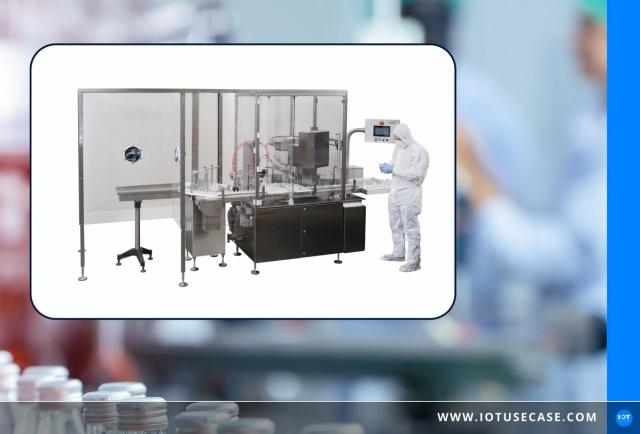



Bottle filling line: every bottle documented
In the solution example, a Red Lion CR3000 series HMI controls the filling machine, programmed with Red Lion's Crimson software. A barcode scanner, a checkweigher and a label printer are connected to it. Crimson captures data from these devices in real time, converts industrial protocols independently of the manufacturer and connects process, SCADA and ERP systems. A preconfigured MQTT connection links it to clouds such as Cumulocity, Azure or AVEVA. The data is logged in a database.
The user is Austrian machine builder Wick-Machinery GmbH, which builds filling machines for cosmetics, diagnostics, chemicals and food. Automation specialist Reliste implemented the solution. The operator scans the order barcode, and the HMI loads the matching recipe and with it the fill quantity per bottle. The scale checks the weight of each bottle, and the system adjusts where necessary and documents the result. Every bottle receives a label with a unique ID, and data logging supplies the data needed for product recalls. The HMI also counts the bottles filled per shift. Wick-Machinery plans to use the CR3000 series in all its filling machines.
Bottle filling lines: frequently asked questions
How is bottle fill weight checked?
For fill quantity inspection, a checkweigher weighs every filled bottle and reports the weight to the control system. In the Wick-Machinery example, the scale communicates directly with the Red Lion CR3000 HMI. If the weight deviates, the system adjusts and documents the result automatically. The target quantity comes from the recipe that belongs to the scanned order.
How does traceability work on a bottle filling line?
Every filled bottle receives a label with a unique ID, created by the label printer via the HMI. At Wick-Machinery, quality control can trace faulty batches back to a single bottle this way. The CR3000's data logging stores the associated data and supplies it in the event of product recalls. The HMI also documents the number of bottles filled per shift.
How is the bottle filling recipe selected?
Filling recipes are stored as preprogrammed machine settings in the HMI and called up by barcode. At Wick-Machinery, the operator scans the order and the system automatically loads the correct liquid quantity per bottle. Nobody has to enter values by hand. The Crimson software connects the barcode scanner, scale and label printer to the operator interface for this purpose.
How does bottle labelling support traceability?
A label printer connected to the HMI creates an individual label with a unique ID for every filled bottle. At Wick-Machinery, the Red Lion CR3000 HMI controls printing, and the Crimson software integrates the printer, barcode scanner and scale. Each bottle is therefore assigned to its order and batch. Data logging stores the information for later queries from quality control.
More assets in “Containers, Silos and Tanks”

Transport container
Shipment monitoring with IoT reports where a transport container is and whether anyone opens it without authorisation. For valuable or sensitive goods, the system raises an alarm immediately instead of a theft only being noticed by the recipient.

Load carrier
An RTLS locates load carriers such as mesh boxes, pallets and bins across halls and plants in real time. Companies cut search times, replace accompanying paperwork and manual scanning, and trigger bookings and transports automatically.

Pallet
Pallet tracking with IoT shows where every pallet is, what is on it and how much stock remains. Sensors, RFID and wireless networks replace search trips, manual scanning and stocktaking counts with a forklift.

Process vessel
Process monitoring with IoT continuously records level, temperature, humidity and other parameters in a process vessel. Without inspection rounds, operators know when to refill or empty it and whether the contents are still usable.

Collection container
Waste container monitoring connects collection containers and waste locks so that they report fill levels and emptying events in real time. Operators see which containers are full, plan collections accordingly and bill by actual use.
Container
Container tracking software with IoT shows where a container is and its status, whether an air freight container, a container in a construction fleet or a unit shipped worldwide. Companies save search time and plan storage more precisely.
IIoT Use Case user group
What no project tells you
What did the project cost? Which sensor didn't survive in the field? How did you get maintenance on board? 300+ industrial users discuss questions like these with each other every month, openly and without vendors in the room.
Frequent topics in these projects, bring your questions:
- Digital Documentation
- Traceability
Online every month
Alternating tech and business focus
Users only
No sales pitches, exchange under NDA
300+ members
OT, IT and IIoT leads from industry