3D printer
An industrial 3D printer must coordinate many axes precisely while staying connected to IT systems and CAD data. A shared network for control and IT makes additive manufacturing faster and the machine simpler.
3D printer at a glance
Most frequent in the projects on this page
Industries
Technologies
Users in these projects

Verified projects featuring 3D printer





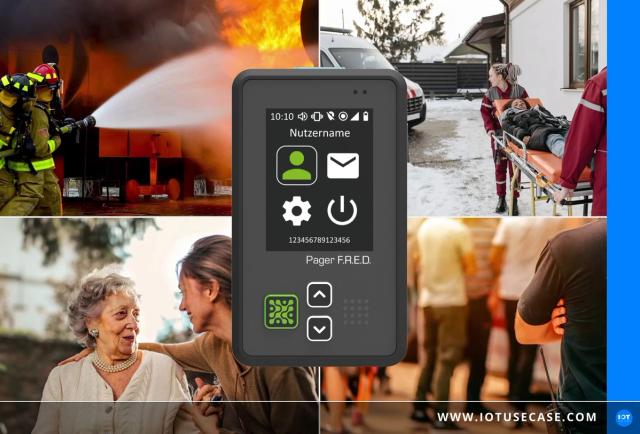



Industrial 3D printer: motion control and IT on one network
In its SZ-6000 3D printer, Shashin Kagaku relies on CC-Link IE TSN, an open industrial Ethernet combining gigabit bandwidth with time-sensitive networking. The IEC/IEEE standards 802.1AS and 802.1Qbv synchronise the data flows and set their priorities. The multi-axis motion control system, the control of UV light processing (DLP) and all other I/O therefore run on the same network, with up to 128 axes. A standard industrial PC is sufficient, and an interface to CAD systems converts design files into motion control programs. HK.SYSTEMS produces most of its IoT hardware on its own 3D printers, including the F.R.E.D. two-way pager, which communicates via LTE-M.
The examples come from mechanical and plant engineering. Japanese manufacturer Shashin Kagaku uses the SZ-6000 to produce ceramic precision parts from aluminium oxide powder and light-reactive resin, cured layer by layer with UV light. Thanks to the lean network architecture, internal wiring is less complex, the machine design was greatly simplified, and a cycle time of 125 microseconds was achieved. HK.SYSTEMS manufactures in Germany and uses its own 3D printing to tailor its hardware precisely to each task, for example alerting fire brigades and rescue services or leak monitoring for hazardous substances.
Industrial 3D printers: frequently asked questions
Is 3D printing suitable for series production?
Yes, 3D printing has left the prototyping lab and matured into a regular production technology. The same requirements therefore apply as for drilling, sawing, punching or milling: strict quality standards and rigorous cost and time targets. Shashin Kagaku meets them with a converged network that carries motion control, UV light control and all other I/O. Wiring becomes less complex, and delivery times and system costs fall.
How does industrial ceramic 3D printing work?
In industrial ceramic 3D printing, a ceramic powder is mixed with a light-reactive resin and cured layer by layer with UV light. Shashin Kagaku uses aluminium oxide powder as the base in the SZ-6000. The parts are then heated in a furnace: the resin evaporates, and the ceramic powder is sintered to achieve its strength. The printer produces parts more than 600 mm high and wide and 300 mm deep with tolerances in the micrometre range.
What does an industrial 3D printer demand from its controller?
An industrial 3D printer requires a fast, high-precision controller that coordinates many rotary and linear axes. In Shashin Kagaku's SZ-6000, it must also be closely linked to the control of digital UV light processing. Both therefore run on the same network as the other machine functions. The system can control up to 128 axes, and an interface converts CAD files directly into motion control programs.
Is low-volume 3D printing worthwhile for in-house IoT hardware?
For specialised devices, low-volume 3D printing is worthwhile because the hardware can be tailored precisely to each task. HK.SYSTEMS manufactures in Germany and produces most of its self-developed hardware on its own 3D printers. One example is the F.R.E.D. two-way pager, which has to sit in a robust housing and be easy to operate in emergencies. The devices are used by fire brigades and rescue services and for leak monitoring of hazardous substances, for example.
More assets in “Machinery and Equipment”

Pump
Pump monitoring with IoT records vibration, temperature, pressure and energy consumption of running pumps. Operators detect damage and faults before a pump fails and plan maintenance by condition rather than at fixed intervals.

Compressor
With IoT, compressor maintenance follows actual condition: sensors record current consumption, pressure, temperature and running times. Operators detect creeping damage and unused running time early and cut energy and service costs.

Electric motor
Motor condition monitoring with IoT continuously measures the vibration, temperature and current draw of electric motors. Operators detect imbalance, bearing damage or winding faults early and replace motors based on condition rather than after a failure.

Packaging machine
OEE software automatically records run times, downtime, speed and rejects on packaging machines from the machine signals. Operators see where their lines lose performance, and machine builders use the same data for remote access and digital services.

Refrigeration system
A refrigeration monitoring system makes service plannable: temperatures, refrigerant circuit pressures, compressor status and energy consumption flow into a platform in real time. Operators and service partners detect faults early, avoid unnecessary site visits and reduce excess consumption.

Air conditioning system
Commercial air conditioning systems in offices, retail branches and data centres can be monitored remotely with IoT. Operators see energy consumption, temperatures and faults in one place, detect failing compressors or refrigerant shortages early and plan service visits precisely.
IIoT Use Case user group
What no project tells you
What did the project cost? Which sensor didn't survive in the field? How did you get maintenance on board? 300+ industrial users discuss questions like these with each other every month, openly and without vendors in the room.
Frequent topics in these projects, bring your questions:
- Digital Documentation
- Employee Safety
Online every month
Alternating tech and business focus
Users only
No sales pitches, exchange under NDA
300+ members
OT, IT and IIoT leads from industry